“When questions arise of possible harmful effects of pesticides, the defenders of the products always try to narrow the scope of the inquiry to their most immediate, direct and measurable consequences and then downplay them, The critics of pesticides, on the other hand, urge that the ecosystem is strongly interconnected, highly variable and vulnerable. Thus debates around environmental impact become debates on the philosophy of nature: are things readily isolated or richly interacting? Is the average behavior of chemicals and organisms an adequate basis for decision making or must we be concerned with the unevenness of the world? Shall we "be realists" and stick to measurable costs and benefits, or shall we concern ourselves with all kinds of consequences of what we do? Gradually we see a confrontation of the world views of mechanistic reductionism and of dialectical materialism.”
Quote by Richard Levins
Work
This book delves into the intersection of biology and dialectical philosophy, offering an analysis of biological phenomena from a unique perspective. more
Author
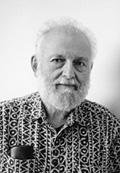
Richard Levins (June 1, 1930 - January 19, 2016) was an accomplished biologist, ecologist, and mathematician. Known for his research in ecology, evolutionary theory, and epidemiology, Levins made significant contributions to the development of theoretical ecology. His work, particularly in the areas of population dynamics, evolutionary stability, and disease transmission models, has had a profound impact on the field. Levins' theories and methods continue to be widely used in ecology, epidemiology, and environmental protection, leaving a lasting legacy in modern ecological and biodiversity research. more
You May Also Like
“We move through this world on paths laid down long before we are born.”