“The more one-sided a society's observance of strict moral principles such as orderliness, cleanliness, and hostility toward instinctual drives, and the more deep-seated its fear of the other side of human nature vitality, spontaneity, sensuality, critical judgment, and inner independence the more strenuous will be its efforts to isolate this hidden territory, to surround it with silence or institutionalize it. Prostitution, the pornography trade, and the almost obligatory obscenity typical of traditionally all-male groups such as the military are part of the legalized, even requisite reverse side of this cleanliness and order. Splitting of the human being into two parts, one that is good, meek, conforming, and obedient and the other that is the diametrical opposite is perhaps as old as the human race, and one could simply say that it is part of "human nature." Yet it has been my experience that when people have had the opportunity to seek and live out their true self in analysis, this split disappears of itself. They perceive both sides, the conforming as well as the so-called obscene, as two extremes of the false self, which they now no longer need. (...) This case and similar ones make me wonder if it will not one day be possible to let children grow up in such a way that they can later have more respect for all sides of their nature and not be forced to suppress the forbidden sides to the point where they must be lived out in violent and obscene ways. Obscenity and cruelty are not a true liberation from compulsive behavior but are its by-products. Free sexuality is never obscene, nor does violence ever result if a person is able to deal openly with his or her aggressive impulses, to acknowledge feelings such as anger and rage as responses to real frustration, hurt, and humiliation. How can it have come about that the split I have just described is attributed to human nature as a matter of course even though there is evidence that it can be overcome without any great effort of will and without legislating morality? The only explanation I can find is that these two sides are perpetuated in the way children are raised and treated at a very early age, and the accompanying split between them is therefore regarded as "human nature." The "good" false self is the result of what is called socialization, of adapting to society's norms, consciously and intentionally passed on by the parents; the "bad", equally false self is rooted in the child's earliest observations of parental behavior, visible only to the child's devoted, unsuspecting eyes and stored up in his or her unconscious, this behavior is what comes to be regarded, generation after generation, as "human nature".”
Quote by Alice Miller
Author
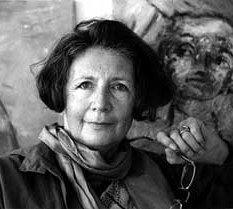
Alice Miller
Alice Miller, born on January 12, 1923, and died on April 12, 2010, was a renowned psychologist. Her research focused on child psychology and the psychology of abuse, delving deeply into the psychological impact of child abuse and neglect. more
You May Also Like
“True success cannot be achieved until you have experienced failure”
“Faith is the fear of God. The fear of God is to shun evil.”
Source: Freedom in Peril: Threats from Within the West
“Those who set in motion the forces of evil cannot always control them afterwards.”
Source: The Marrow of Tradition
“Wounding others to fix your pain can never bring peace, evil begets evil.”
Source: Monsters in My Mind
Source: The Passing of the Great Race or the Racial Basis of European History