Quotessence
Home / Quotes / Quote by Yasunari Kawabata

Quote by Yasunari Kawabata

“One can’t stop and suddenly speak to a complete stranger, can one?......When it happens I could die of sadness. I feel somehow empty and drained....”

Quote by Yasunari Kawabata

Author
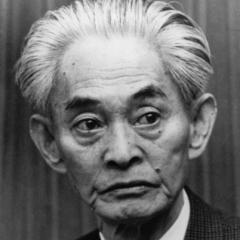
Yasunari Kawabata
Yasunari Kawabata

Yasunari Kawabata was a renowned Japanese novelist born on June 14, 1899, and passed away on April 16, 1972. His works are known for their delicate emotional descriptions and unique cultural background of Japan, making him an indispensable figure in the history of Japanese literature. more

You May Also Like

“We still don't have a good word to describe what is missing in Cameroon, indeed in poor countries across the world. But we are starting to understand what it is. Some people call it 'social capital, or maybe 'trust'. Others call it 'the rule of law', or 'institutions'. But these are just labels. The problem is that Cameroon, like other poor countries, is a topsy-turvy world in which it's in most people's interest to take action that directly or indirectly damages everyone else.”

“Burke's complaint against the [(French)] revolutionaries was that they assumed the right to spend all trusts and endowments on their own self-made emergency. Schools, church foundations, hospitals - all institutions that had been founded by people, now dead, for the benefit of their successors - were expropriated or destroyed, the result being the total waste of accumulated savings, leading to massive inflation, the collapse of education and the loss of the traditional forms of social and medical relief. In this way contempt for the dead leads to the disenfranchisement of the unborn, and all that result is not, perhaps, inevitable, it has been repeated by all subsequent revolutions. Through their contempt for the intentions and emotions of those who had laid things by, revolutions have systematically destroyed the stock of social capital, and always revolutionaries justify this by impeccable utilitarian thinking.”

“The West’s adversarial political system, in which all manner of decisions were made by majority rule, was little more than a refined version of civil war, replacing one form of coercion (fighting) with another (voting).”