Quotessence
Home / Quotes / Quote by Etty Hillesum

Quote by Etty Hillesum

“Living and dying, sorrow and joy, the blisters on my feet and the jasmine behind the house, the persecution, the unspeakable horrors — it is all as one in me, and I accept it all as one mighty whole and begin to grasp it better if only for myself; without being able to explain to anyone else how it all hangs together. I wish I could live for a long time so that one day I may know how to explain it, and if I am not granted that wish, well, then somebody else will perhaps do it, carry on from where my life has been cut short. And that is why I must try to live a good and faithful life to my last breath: so that those who come after me do not have to start all over again, need not face the same difficulties. Isn’t that doing something for future generations?” (3 July 1943)”

Quote by Etty Hillesum

Author
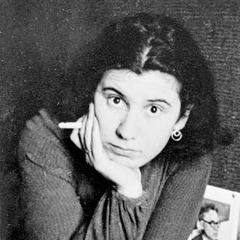
Etty Hillesum
Etty Hillesum

Etty Hillesum was a Dutch writer and diarist, born on January 15, 1914, and died on November 30, 1943. Her works are known for their profound personal insights and philosophical reflections on human existence. more

You May Also Like

“Si alguna vez me hubiera yo atrevido a matar a alguien -añadió con sencillez- hubiera sido a un optimista. - ¿Cómo? -exclamó Merton, risueño-. ¿A usted le parece que la alegría de uno es desagradable a los demás? - A la gente le agrada la risa frecuente -contestó el padre Brown-; pero no creo que le agrade la sonrisa perenne. La alegría sin humorismo es cosa muy cansada.”

“Anna held up a small black-bound memorandum book. Cordelia hadn’t even seen her retrieve it. They strode out of the bedroom, Anna waving the book over her head in triumph. “This,” she announced, “will hold the answers to all our questions.” Matthew looked up, his eyes fever-bright. “Is this your list of conquests?” “Of course not,” Anna declared. “It’s a memorandum book… about my conquests. That is an important but meaningful distinction.” Anna flipped through the book. There were many pages, and many names written in a bold, sprawling hand. “Hmm, let me see. Katherine, Alicia, Virginia—a very promising writer, you should look out for her work, James—Mariane, Virna, Eugenia—” “Not my sister Eugenia?” Thomas nearly upended his cake. “Oh, probably not,” Anna said. “Laura, Lily… ah, Hypatia. Well, it was a brief encounter, and I suppose you might say she seduced me.…” “Well, that hardly seems fair,” said James. “Like someone solving a case before Sherlock Holmes. If I were you I would feel challenged, as if to a duel.” Matthew chuckled. Anna gave James a dark look. “I know what you’re trying to do,” she said. “Is it working?” said James. “Possibly,” said Anna, regarding the book. Cordelia couldn’t help but wonder: Was Ariadne’s name in there? Was she considered a conquest now, or something—someone—else?”

“Religious intolerance is an idea that found its earliest expression in the Old Testament, where the Hebrew tribe depicts itself waging a campaign of genocide on the Palestinian peoples to steal their land. They justified this heinous behavior on the grounds that people not chosen by their god were wicked and therefore did not deserve to live or keep their land. In effect, the wholesale slaughter of the Palestinian peoples, eradicating their race with the Jew's own Final Solution, was the direct result of a policy of religious superiority and divine right. Joshua 6-11 tells the sad tale, and one needs only read it and consider the point of view of the Palestinians who were simply defending their wives and children and the homes they had built and the fields they had labored for. The actions of the Hebrews can easily be compared with the American genocide of its native peoples - or even, ironically, the Nazi Holocaust. With the radical advent of Christianity, this self-righteous intolerance was borrowed from the Jews, and a new twist was added. The conversion of infidels by any means possible became the newfound calling card of religious fervor, and this new experiment in human culture spread like wildfire. By its very nature, how could it not have? Islam followed suit, conquering half the world in brutal warfare and, much like its Christian counterpart, it developed a new and convenient survival characteristic: the destruction of all images and practices attributed to other religions. Muslims destroyed millions of statues and paintings in India and Africa, and forced conversion under pain of death (or by more subtle tricks: like taxing only non-Muslims), while the Catholic Church busily burned books along with pagans, shattering statues and defacing or destroying pagan art - or converting it to Christian use. Laws against pagan practices and heretics were in full force throughrout Europe by the sixth century, and as long as those laws were in place it was impossible for anyone to refuse the tenets of Christianity and expect to keep their property or their life. Similar persecution and harassment continues in Islamic countries even to this day, officially and unofficially.”