Quotessence
Home / Quotes / Quote by Italo Calvino

Quote by Italo Calvino

“And when my spirit wants no stimulus or nourishment save music, I know it is to be sought in cemeteries: the musicians hide in the tombs; from grave to grave flute trills, harp chords answer one another.”

Quote by Italo Calvino

Work

Invisible Cities

In this novel, the traveler Marco Polo recounts his journeys to a series of cities that exist beyond the physical world, each city embodying a different aspect of human life and culture. The ruler, Kublai Khan, listens intently, intrigued by the stories of places that are both real and imagined. The narrative delves into themes of perception, power, and the essence of existence. more
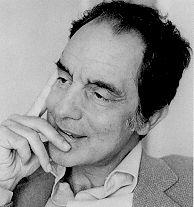
Author

Italo Calvino
Italo Calvino

Italian writer and journalist, known for his unique narrative style and rich imagination. Calvino is considered one of the greatest writers of the 20th century, whose works have had a profound impact on literature both in Italy and around the world. more

You May Also Like

“No sooner was I safely among the gravestones than a great feeling of warmth and calm contentment came sweeping over me. Life among the dead. This was where I was meant to be! What a revelation! And what a place to have it! I could succeed at whatever I chose. I could, for instance, become an undertaker. Or a pathologist. A detective, a gravedigger, a tombstone maker, or even the world's greatest murderer. Suddenly the world was my oyster—even if it was a dead one.”

“A soft breeze settled around our shoulders as we walked into the cemetery. That same breeze made the world around us shiver a little bit. The slick green leaves of the tall trees rustled, and the long curtain of ivy dangling from the branches began to wave. When the ivy blows in the graveyard, it casts the prettiest lacelike shadows on the ground. They remind me of banners, rippling over the dearly departed in silent celebration.”

“Cemeteries in Bohemia are like gardens. The graves are covered with grass and colorful flowers. Modest tombstones are lost in the greenery. When the sun goes down, the cemetery sparkles with tiny candles. It looks as though the dead are dancing at a children's ball. Yes, a children's ball, because the dead are as innocent as children. No matter how brutal life becomes, peace always reigns in the cemetery. Even in wartime, in Hitler's time, in Stalin's time, through all occupations. When she felt low, she would get into the car, leave Prague far behind, and walk through one or another of the country cemeteries she loved so well. Against a backdrop of blue hills, they were as beautiful as a lullaby.”

“Superstition, as indigenous to Louisiana as gators and Tabasco, holds that the spirits of the dead avenge any disruption of their bodies, which makes one wonder at the rancor released on the 1957 day when fifty-five white families re-interred their beloved in Hope Mausoleum after the Rt. Rev. Girault M. Jones, Bishop of Louisiana, deconsecrated the Girod Street Cemetery, condemning every last African American bone to anonymity in a mass grave in Providence Memorial Park. From that pogrom grew the Superdome. Thirteen acres of structural steel framing stretch up to 273 feet from the unholy ground, a towering testament to the American propensity to cheer black men into the end zones and desert them entirely six points later.”