Quotessence
Home / Quotes / Quote by John Knowles

Quote by John Knowles

“As I had to do whenever I glimpsed this river, I thought of Phineas. Not of the tree and pain, but of one of his favorite tricks, Phineas in exaltation, balancing on one foot on the prow of a canoe like a river god, his raised arms invoking the air to support him, face transfigured, body a complex set of balances and compensations, each muscle aligned in perfection with all the others to maintain this supreme fantasy of achievement, his skin glowing from immersions, his whole body hanging between river and sky as though he had transcended gravity and might by gently pushing upward with his foot glide a little way higher and remain suspended in space, encompassing all the glory of the summer and offering it to the sky.”

Quote by John Knowles

Author
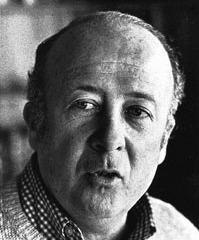
John Knowles
John Knowles

John Knowles was an American novelist born on September 16, 1926, and passed away on November 29, 2001. Known for his profound psychological portrayals and insights into American social issues, his works include the classic novel 'A Separate Peace'. more

You May Also Like

“Someone knocked me down; I pushed Brinker over a small slope; someone was trying to tackle me from behind. Everywhere there was the smell of vitality in clothes, the vital something in wool and flannel and corduroy which spring releases. I had forgotten that this existed, this smell which instead of the first robin, or the first bud or leaf, means to me that spring has come. I had always welcomed vitality and energy and warmth radiating from thick and sturdy winter clothes. It made me happy, but I kept wondering about next spring, about whether khaki, or suntans or whatever the uniform of the season was, had this aura of promise in it. I felt fairly sure it didn't.”

“My misery was too deep to speak any more. I scanned the page; I was having trouble breathing, as though the oxygen were leaving the room. Amid its devastation my mind flashed from thought to thought, despairingly in search of something left which it could rely on. Not rely on absolutely, that was obliterated as a possibility, just rely on a little,some solace, something surviving in the ruin.”

“I had to be right in never talking about what you could not change, and I had to make many people agree that I was right. None of them ever accused me of being responsible for what had happened to Phineas, either because they could not believe it or because they could not understand it. I would have talked about that, but they would not, and I would not talk about Phineas in any other way.”

“The cracks grew over him like vines, faster and faster. At first he bucked, whinnying metallic screeches. Then he gradually stilled, looking up at me with frightened glass eyes. He was growing. New, molten glass leeched out between his fissures, cooled and hardened only to crack again and make room for more liquid glass. The gears inside him moaned and creaked, and metal filings gathered at the base of his transparent stomach, only to fly up again and form more joints and chains and gears. Black smoke poured from his nostrils. Soon he was the size of a large dog, then a man, and still he grew and grew until he towered over my bed, as big as any plow horse I’d ever seen. Glass dripped down his flanks like sweat, a few rivulets still glowing with molten heat.”

“To speak of a communication failure implies a breakdown of some sort. Yet this does not accurately portray what occurs. In truth, communication difficulties arise not from breakdown but from the characteristics of the system itself. Despite promising beginnings in our intimate relationships, we tend over time to evolve a system of communication that suppresses rather than reveals information. Life is complicated, and confirming or disconfirming the well-being of a relationship takes effort. Once we are comfortably coupled, the intense, energy-consuming monitoring of courtship days is replaced by a simpler, more efficient method. Unable to witness our partners’ every activity or verify every nuance of meaning, we evolve a communication system based on trust. We gradually cease our attentive probing, relying instead on familiar cues and signals to stand as testament to the strength of the bond: the words “I love you,” holidays with the family, good sex, special times with shared friends, the routine exchange, “How was your day?” We take these signals as representative of the relationship and turn our monitoring energies elsewhere. ... Not only do the initiator’s negative signals tend to become incorporated into the existing routine, but, paradoxically, the initiator actively contributes to the impression that life goes on as usual. Even as they express their unhappiness, initiators work at emphasizing and maintaining the routine aspects of life with the other person, simultaneously giving signals that all is well. Unwilling to leave the relationship yet, they need to privately explore and evaluate the situation. The initiator thus contrives an appearance of participation,7 creating a protective cover that allows them to “return” if their alternative resources do not work out. Our ability to do this—to perform a role we are no longer enthusiastically committed to—is one of our acquired talents. In all our encounters, we present ourselves to others in much the same way as actors do, tailoring our performance to the role we are assigned in a particular setting.8 Thus, communication is always distorted. We only give up fragments of what really occurs within us during that specific moment of communication.9 Such fragments are always selected and arranged so that there is seldom a faithful presentation of our inner reality. It is transformed, reduced, redirected, recomposed.10 Once we get the role perfected, we are able to play it whether we are in the mood to go on stage or not, simply by reproducing the signals. What is true of all our encounters is, of course, true of intimate relationships. The nature of the intimate bond is especially hard to confirm or disconfirm.11 The signals produced by each partner, while acting out the partner role, tend to be interpreted by the other as the relationship.12 Because the costs of constantly checking out what the other person is feeling and doing are high, each partner is in a position to be duped and misled by the other.13 Thus, the initiator is able to keep up appearances that all is well by falsifying, tailoring, and manipulating signals to that effect. The normal routine can be used to attest to the presence of something that is not there. For example, initiators can continue the habit of saying, “I love you,” though the passion is gone. They can say, “I love you” and cover the fact that they feel disappointment or anger, or that they feel nothing at all. Or, they can say, “I love you” and mean, “I like you,” or, “We have been through a lot together,” or even “Today was a good day.”