Quotessence
Home / Quotes / Quote by George Lakoff

Quote by George Lakoff

“A serious appreciation of cognitive science requires us to rethink philosophy from the beginning, in a way that would put it more in touch with the reality of how we think. ... Unless we know our cognitive unconscious fully and intimately, we can neither know ourselves nor truly understand the basis of our moral judgments, our conscious deliberations, and our philosophy.”

Quote by George Lakoff

Work

Philosophy in the Flesh: The Embodied Mind and Its Challenge to Western Thought

This book delves into the concept of the embodied mind, examining how our physical experiences shape our philosophical understanding and challenge traditional Western thought. more

Author
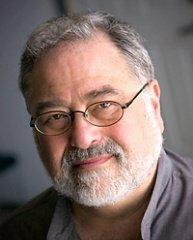
George Lakoff
George Lakoff

George Lakoff, born on May 24, 1941, is an American cognitive linguist. His research focuses on the relationship between language and thought, and he has made significant contributions to the field of linguistics with his theories on cognitive linguistics. more

You May Also Like

“In most sciences, there are few findings more prized than a counterintuitive result. It shows something surprising and forces us to reconsider our often tacit assumptions. In philosophy of mind, a counterintuitive “result” (e.g., a mind-boggling implication of somebody’s “theory” of perception, memory, consciousness, or whatever) is typically taken as tantamount to a refutation. This affection for one’s current intuitions, sometimes amounting (as we saw in the previous chapter) to a refusal even to consider alternative perspectives, installs deep conservatism in the methods of philosophers. Conservatism can be a good thing, but only if it is acknowledged. By all means, let’s not abandon perfectly good and familiar intuitions without a fight, but let’s recognize that the intuitions that are initially used to frame the issues may not live to settle the issues.”

“...[T]he whole undertaking of philosophical inquiry requires a prior understanding of the conceptual system in which the undertaking is set. That is an empirical job for cognitive science and cognitive semantics. ... Unless this job is done, we will not know whether the answers philosophers give to their questions are a function of the conceptualization built into the questions themselves.”

“If you are one of those people who can’t hold a lot in mind at once—you lose focus and start daydreaming in lectures, and have to get to someplace quiet to focus so you can use your working memory to its maximum—well, welcome to the clan of the creative. Having a somewhat smaller working memory means you can more easily generalize your learning into new, more creative combinations. Because your learning new, more creative combinations. Having a somewhat smaller working memory, which grows from the focusing abilities of the prefrontal cortex, doesn’t lock everything up so tightly, you can more easily get input from other parts of your brain. These other areas, which include the sensory cortex, not only are more in tune with what’s going on in the environment, but also are the source of dreams, not to mention creative ideas. You may have to work harder sometimes (or even much of the time) to understand what’s going on, but once you’ve got something chunked, you can take that chunk and turn it outside in and inside round—putting it through creative paces even you didn’t think you were capable of! Here’s another point to put into your mental chunker: Chess, that bastion of intellectuals, has some elite players with roughly average IQs. These seemingly middling intellects are able to do better than some more intelligent players because they practice more. That’s the key idea. Every chess player, whether average or elite, grows talent by practicing. It is the practice—particularly deliberate practice on the toughest aspects of the material—that can help lift average brains into the realm of those with more “natural” gifts. Just as you can practice lifting weights and get bigger muscles over time, you can also practice certain mental patterns that deepen and enlarge in your mind.”

“In a country where those who are committing crime are supported, rewarded, applauded and promoted. In a country where no one is arrested for doing wrong or for breaking the law. No one is taking responsibility and accountability. It will make everyone in that country to voluntarily participate in committing crime. Everyone will eventually end up being corrupt or criminals including foreigners. It will be a competition or a dare for thieves on who steals more and who steals better. People everyday will ask themselves why should they bother being good and not committing a crime, when everyone is doing it. Crime stats will be so high and increasing everyday. It is a duty of the president and the cabinet ministers in making sure the law is followed .If not everyone in that country will commit crime and they will be ok with it. No one will see anything wrong. That includes the law enforcement or institution.”

“With the little information, we know. Whenever we point out red flags. We are told to mind our own business. Why do we want to police other people's behavior and tell them what to do with their lives, money, and bodies? when we try to say what might be wrong. You don’t want to hear the truth or to accept it because if you do listen. it means you must change. Take accountability and responsibility for your actions, but you don’t want to change your bad behavior. The reason is that you are enjoying it and you are benefiting a lot from it. For as long as we lie to each other. Support each other in doing bad things and bad behavior. We are still going to get hurt or worse might happen.”