Quotessence
Home / Quotes / Quote by Thomas Hardy

Quote by Thomas Hardy

“Well, here I am, just come home; a fellow gone to the bad; though I had the best intentions in the world at one time. Now I am melancholy mad, what with drinking and one thing and another.”

Quote by Thomas Hardy

Work

Jude the Obscure

Thomas Hardy's novel follows the life of Jude Fawley, a man of humble origins who aspires to a higher education and a better life, only to face numerous challenges and heartbreaks in his pursuit of love and social mobility. more
Author

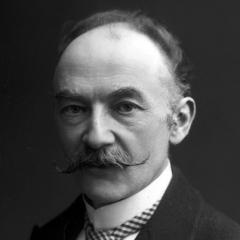
Thomas Hardy
Thomas Hardy

Thomas Hardy, a British novelist born on June 2, 1840, and died on January 11, 1928, is renowned for his novels that depict rural life, reflecting the social changes in 19th-century England. His works often carry a sense of pessimism, depicting the fates of characters with sympathy. more

You May Also Like

“Her eyes are grey. Her hair is straggly and wet. Her fingers are stubby. The nails are chewed and broken. Her teeth are crooked, jagged things. There is a vacancy in her gaze, a feeling of absence when you are near her that is impossible to put into words. Her sigil is the hooked ring. One day her hook will catch your heart. Describing her, we articulate what she is and why she is: when hope is past, she is there. She is in a thousand thousand waiting rooms and empty streets, in grey concrete buildings and anonymous hotels. She is on the other side of every mirror. When the eyes that look back at you know you too well, and no longer care for what they see, they are her eyes. She stands and waits, and in her posture the pain no longer tells you to live, and in her presence joy is unimaginable.”

“Anyone who cannot come to terms with his life while he is alive needs one hand to ward off a little his despair over his fate –he has little success in this –but with his other hand he can note down what he sees among the ruins, for he sees different (and more) things than do the others; after all, dead as he is in his own lifetime, he is the real survivor. This assumes that he does not need both hands, or more hands than he has, in his struggle against despair.”

“Manon died in the desert, but in the arms of the man who loved her with the the entire brilliance of his soul, who, when she was dead, dug a grave for her, and watered it with his tears, then buried his own heart within it.. While Marguerite, a Sinner like Manon, had died in a sumptuous bed... But in that desert of the heart, a more barren, a vaster, a more merciless desert, than that in which Manon had found her last resting place.”

“It was at Auschwitz that human beings underwent their first mutations. Without Auschwitz, there would have been no Hiroshima. Or genocide in Africa. Or attempts to dehumanize man by reducing him to a number, an object: it was at Auschwitz that the methods to be used were conceived, catalogued, and perfected. It was at Auschwitz that men mutilated and gambled with the future. The despair begotten at Auschwitz will linger for generations.”