Quotessence
Home / Quotes / Quote by Hermann Hesse

Quote by Hermann Hesse

“When I have neither pleasure nor pain and have been breathing for a while the lukewarm insipid air of these so called good and tolerable days, I feel so bad in my childish soul that I smash my moldering lyre of thanksgiving in the face of the slumbering god of contentment and would rather feel the very devil burn in me than this warmth of a well-heated room. A wild longing for strong emotions and sensations seethes in me, a rage against this toneless, flat, normal and sterile life. I have a mad impulse to smash something, a warehouse, perhaps, or a cathedral, or myself, to commit outrages, to pull off the wigs of a few revered idols...”

Quote by Hermann Hesse

Work

Steppenwolf

A complex narrative that delves into themes of identity, alienation, and the human condition more

Author

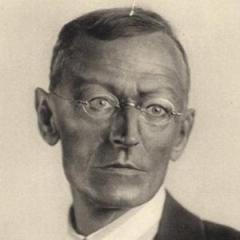
Hermann Hesse
Hermann Hesse

Hermann Hesse was a German poet and novelist, born on July 2, 1877, and died on August 9, 1962. Known for his profound psychological descriptions and exploration of human nature, his works include classics such as 'Steppenwolf' and 'The Glass Bead Game'. more

You May Also Like

“This is the great lesson the depressive learns: Nothing in the world is inherently compelling. Whatever may be really “out there” cannot project itself as an affective experience. It is all a vacuous affair with only a chemical prestige. Nothing is either good or bad, desirable or undesirable, or anything else except that it is made so by laboratories inside us producing the emotions on which we live. And to live on our emotions is to live arbitrarily, inaccurately—imparting meaning to what has none of its own. Yet what other way is there to live? Without the ever-clanking machinery of emotion, everything would come to a standstill. There would be nothing to do, nowhere to go, nothing to be, and no one to know. The alternatives are clear: to live falsely as pawns of affect, or to live factually as depressives, or as individuals who know what is known to the depressive. How advantageous that we are not coerced into choosing one or the other, neither choice being excellent. One look at human existence is proof enough that our species will not be released from the stranglehold of emotionalism that anchors it to hallucinations. That may be no way to live, but to opt for depression would be to opt out of existence as we consciously know it.”