Quotessence
Home / Quotes / Quote by Deborah Levy

Quote by Deborah Levy

“Cuando una mujer tiene que encontrar una forma nueva de vivir y rompe con la historia social que ha borrado su nombre, se espera que se odie a sí misma atrozmente, que enloquezca de dolor, que llore arrepentida. Son las joyas reservadas para ella en la corona del patriarcado, siempre a su disposición. No faltan las lágrimas, pero es mejor atravesar la oscuridad negra y azulada que quedarse con esas joyas que nada valen”

Quote by Deborah Levy

Work

The Cost of Living: A Working Autobiography

Browse quotes and source details for this work. more

Author
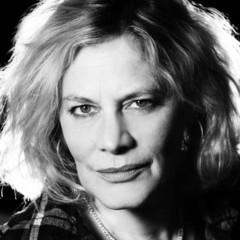
Deborah Levy
Deborah Levy

Deborah Levy, born in 1959, is a distinguished playwright from the United Kingdom. Her works are known for their profound psychological insights and sharp social commentary. Levy's writing spans a variety of themes, including family, love, politics, and identity. more

You May Also Like

“White women who suffer from mental illness are depicted as idle, spoiled, or just plain hysterical. Black men are demonized and pathologized. Black women with psychological problems are certainly not seen as geniuses; we are generally not labeled ‘hysterical’ or ‘eccentric’ or even ‘pathological’. When a black woman suffers from a mental disorder, the overwhelming opinion is that she is weak. And weakness in black women is intolerable.”

“I’ve frequently been told things like: “Girl, you’ve been hanging out with too many white folk” ; “What do you have to be depressed about? If our people could make it through slavery, we can make it through anything” ; “Take your troubles to Jesus, not no damn psychiatrist.”

“The illusion of strength has been and continues to be of major significance to me as a black woman. The one myth that I have had to endure my entire life is that of my supposed birthright to strength. Black women are supposed to be strong – caretakers, nurtures, healers of other people – any of the twelve dozen variations of Mammy. Emotional hardship is supposed to be built into the structure of our lives. It went along with the territory of being both black and female in a society that completely undervalues the lives of black people and regards all women as second-class citizens. It seemed that suffering, for a black woman, was part of the package. Or so I thought.”

“Five days after the food was Easter Sunday. The only church that had not been flooded in the neighborhood invited everyone to services, come as you are. Mom decreed we were going to church. "Church!?" I thought. What in the world was she thinking? We had been cleaning up flood mud for three days with no water to clean ourselves up. Mom insisted. She said that Calvary Baptist was going to allow women into the sanctuary in pants and that was something we were not going to miss. (In 1977 this was earthshattering for sure.) I guess we would take a stand for women's equality!”

“The first obvious and generally controversy-free, fighting-related difference between men and women is that of physical strength. Men are considerably stronger than women, on average, of course, and all the following data are on average. To begin with, men are bigger than women. They are about nine percent taller and proportionately heavier. Even these facts do not tell the whole story, because in muscle and bone mass men's advantage is bigger still. Relative to body weight, men are more muscular and bony, with the main difference concentrated in the arms, chest and shoulders. Fat comprises only 15 per cent of their body weight, compared with 27 per cent in women.”

“European women's "sexual fear" appears to arise in special circumstances of unequal power structures at times of particular political pressure: when the dominant power group perceives itself as threatened and vulnerable. Protecting the virtue of white women was the pretext for instituting draconian measures against indigenous populations [...] the actual level of rape and sexual assault bore no relation to the hysteria that the subject aroused.”

“A woman's body always stands on the outskirts of the town, verging on uncivilization. A thin paper gown is all that separates it from the wilderness. Half of its whole being is devoted to remembering how to live in the woods. This is why Witch, this is why Whore, this is why Unlucky and this is why Unclean. This is why attempts to govern the female body always have the feeling of a last resort, because the female body is fundamentally ungovernable.”

“To answer your question as honestly as I can, I've wanted since I was very little to not have to worry about money. I've never been poverty-level poor (I mean, there's been years where I've been officially beneath the poverty line, but that wasn't poverty: that was being a student and living the Student Lifestyle), but I've been in a place where you know you can't afford a better-quality food, where you can't do certain things because of money, and I'd prefer not to have those problems if I can. I sort of have troubles with money in general, with how it determines so much of our lives but with how we all try to ignore it, but I would like to be (and stay) in a place where I can pick up some new comics and games and not worry about how much they cost. This is terrible; you're asking me where I want to be in the future, what I want my life to be like, and the only thing I can tell you is "Man, all I know is I don't want to be POOR.”