Quotessence
Home / Quotes / Quote by Maya Angelou

Quote by Maya Angelou

“When someone tells you who and what they are. Believe them the first time. They know themselves better than you do. They know what they’ve lived. You don’t. You only see an exterior. And whether you choose to invalidate them or not then, is up to the person that ‘you’ are.”

Quote by Maya Angelou

Author
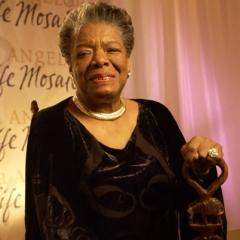
Maya Angelou
Maya Angelou

Maya Angelou was an American author, poet, playwright, actress, and lecturer, known for her profound exploration of race, gender, and culture in her work. Her autobiographical works, including 'I Know Why the Caged Bird Sings,' which detailed her early life of poverty and sexual exploitation, have gained widespread acclaim. more

You May Also Like

“On the day I started my self-examination I asked myself these questions: ‘Am I interested in people? Do ideas excite me? Am I knowledgeable enough about novels to write one?’ I’m sure there were other questions, but I forget them now. My earliest memories involve being one among many other children, so I did not grow up with a self-centered view of myself, and because of my early jobs I knew a great deal about life. I had knocked about America as a lad, seen Europe in my college years and had been in the Pacific as an adult. But most important, I had always loved people, their histories, the prestigious things they did and said, and I especially relished their stories about themselves. I was so eager to collect information about everyone I met that I was practically a voyeur, and always it was their accounts that mattered, not mine, for I was a listener, not a talker. If the writing of fiction was the reporting of how human beings behaved, I was surely eligible, for I liked not only their stories, I liked them. As for ideas on which to base my writing, I was interested in everything—I was a kind of intellectual vacuum cleaner that picked up not only the oddest collection of facts imaginable but also solid material on the basic concerns of life.” —Chapter XI, “Intellectual Equipment”, page 297”

“We can be nomads in our own narrative, can feel like a stranger in our own story, just stopping by and traveling through, forever looking for something we feel we will not and cannot ever find. This sense of placelessness has everything to do with personhood, has everything to do with the ways our lives will project forward—who we will become and why. We are, all of us, trying to go back to the backyards where we learned to throw baseballs, the kitchens where we learned how to cook. We are trying to get back to the fields our families farmed, the ancient recipes and remedies, hoping to know what we need to make the soups and sauces. We search for bloodlines lost in map lines, the immigrant story of coming to a new land only to find ourselves missing the old one. Generations stretch out, longer and farther from our place of origin, straining and stretching to hold on to who we are. But the currents of change are strong, washing it all away in the waters of time.”

“Throughout this conversation, it’s important to remember that you’re communicating with a real human being — a person with feelings, stories, history, trauma, heart, and the same needs as you to be heard, understood, and most importantly, respected. Kashdan said that the now-common, overused practice of labeling people as narcissists, gaslighters, and toxic can make us dehumanize other people, especially when their opinions don’t reflect our values. That’s why it’s important to listen to others and understand their point of view. Humans have the ability to change and improve themselves. Minson highlights that when we see that potential in those we disagree with, we’re likely to engage with them more effectively. It’s important to avoid seeing people as “good” or “bad.” This will help you extend some grace and empathy to the other person.”