Quotessence
Home / Quotes / Quote by Agatha Christie

Quote by Agatha Christie

“And so she had booked her journey to this place which had no associations with the past, a place quite new to her which had the qualities she loved so much: sunlight, pure air and the strangeness of new people and things. Here, she had thought, things will be different. But they were not different.”

Quote by Agatha Christie

Work

Destination unknown

The narrative follows individuals who set out for a destination that is not revealed to them, focusing on their experiences and interactions along the way. The book delves into the psychological and emotional aspects of traveling into the unknown, examining how people cope with ambiguity and the search for meaning in unfamiliar circumstances. The plot emphasizes the journey itself rather than the final destination, highlighting the transformative power of uncertainty and the human desire to explore beyond familiar boundaries. more

Author

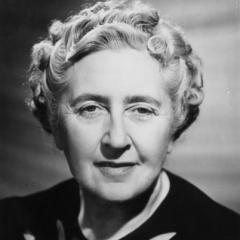
Agatha Christie
Agatha Christie

Agatha Christie, a renowned British detective novel writer, is known as the Queen of Detective Fiction. She was born on September 15, 1890, and passed away on January 12, 1976. Christie's works are characterized by intricate plots, unique reasoning, and vivid characters, and have had a profound impact on detective fiction worldwide. more

You May Also Like

“Women are in every field and in charge more often now. Actually,” he added with amusement, “more often than not, the only ones who give her a hard time are your kind.'' A lot of immortals are older; from a time when women weren’t in power positions. They aren’t always comfortable with her being in charge. Like you weren’t when you slammed the door in her face. Jackie often works twice as hard to earn their respect.” Jackie often won’t allow his help.” Vincent could be Jackie seemed the stubborn, hard-headed sort, determined to do it on her own. He supposed she’d had to be. Despite what Tiny said, he knew there was still sexism in the business world today and not just among his kind.”

“With respect to Stoicism, Hadot has described four features that constitute the universal Stoic attitude. They are, first, the Stoic consciousness of "the fact that no being is alone, but that we make up part of a Whole, constituted by the totality of human beings as well as by the totality of the cosmos"; second, the Stoic "feels absolutely serene, free, and invulnerable to the extent that he has become aware that there is no other evil but moral evil and that the only thing that counts is the purity of moral consciousness"; third, the Stoic "believes in the absolute value of the human person," a belief that is "at the origin of the modern notion of the 'rights of man'"; finally, the Stoic exercises his concentration "on the present instant, which consists, on the one hand, in living as if we were seeing the world for the first and for the last time, and, on the other hand, in being conscious that, in this lived presence of the instant, we have access to the totality of time and of the world." 17 Thus, for Hadot, cosmic consciousness, the purity of moral consciousness, the recognition of the equality and absolute value of human beings, and the concentration on the present instant represent the universal Stoic attitude. The universal Epicurean attitude essentially consists, by way of "a certain discipline and reduction of desires, in returning from pleasures mixed with pain and suffering to the simple and pure pleasure of existing.”