Quotessence
Home / Quotes / Quote by M. Scott Peck

Quote by M. Scott Peck

Work

The Road Less Traveled: A New Psychology of Love, Traditional Values and Spiritual Growth

This book delves into the complexities of human relationships and self-improvement, offering readers a unique perspective on love, personal values, and spiritual development. more

Author
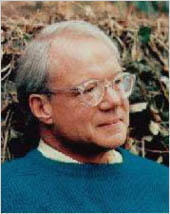
M. Scott Peck
M. Scott Peck

M. Scott Peck was an American psychiatrist and writer, best known for his book 'The Road Less Traveled', which delves into themes of personal growth, psychotherapy, and the human mind. His writing style has been widely appreciated, and his works have had a profound impact on the fields of psychology and philosophy. more

You May Also Like

“Classical philosophy holds that perpetual agreement with another person is incompatible with friendship. Because no two people can possibly agree on everything, someone who never expresses disagreement with you is acting insincerely - and true friendship requires sincerity above almost everything else.”

“[Ralph Waldo] Emerson believed that any friendship worthy of the name consisted of two essential elements: tenderness, or honest affection not tied to any material interest, and truth, or a willingness to speak sincerely without fear that frankness will destroy the relationship. Simply agreeing with everything someone says is a sign not of friendship but of insincerity. 'Better be a nettle in the side of your friend than his echo,' he writes. Friendship should be 'an alliance of two large, formidable natures, mutually feared, before yet they recognize the deep identity which, beneath these disparities, unites them.”

“The most important symptom of tact derives from this respect for the individuality of oneself and others: sensitivity. It is the only way possible to construct pleasant sociable interactions, as it never permits too much closeness nor too much distance. Everything explicit, every eruptive honesty, is avoided. Untruth which succors is always better than truth which damages; however, a bindingness which does not bind is the best. In this sphere there should be neither good nor evil, neither truth nor error, but only the value of beneficence - the hygiene of the greatest possible nurturance. Only the barbaric person lets himself be deceived by flattery and lets himself be surrounded by the fog of politeness, only to curse the world so spoiled. Let us imagine just for a second what interaction between persons who barely know each other and yet who say what they think or even assume about the other is like: After a quick collision, the coldness of outer space would descend upon them.”

“Don’t you see," she would explain, "that when I see anything or do anything there is no joy in keeping it to myself? I want to give everything to you. If I am alone and I see a picture that I love, or I read some passage from a book, I think to myself there is no meaning in this unless he knows it too. You are such a part of me that to stand alone leaves me dumb, without speech, without eyes. A tree with hatched branches, like someone with no hands. Life is valueless unless I can share everything with you – beauty, ugliness, pain. There must be no shadows between us, no quiet corners in our hearts.”