“I'll show them that Anne Frank wasn't born yesterday. They'll sit up and take notice and keep their big mouths shut when I make them see they ought to attend to their own manners instead of mine.”
Quote by Anne Frank
Work
Anne Frank: The Diary of a Young Girl
This book is a deeply personal narrative of Anne Frank's experiences hiding from the Nazis during World War II. It offers a unique perspective on the horrors of the Holocaust through the eyes of a young girl, capturing her thoughts, feelings, and hopes amidst the turmoil. more
Author
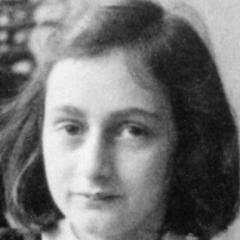
Anne Frank
Anne Frank, born on June 12, 1929, was a renowned Jewish author. Her diary, 'The Diary of a Young Girl,' is a testament to the sufferings of Jews during World War II and a classic in world literature. She and her family hid from the Nazis in an Amsterdam hiding place during the war, and her diary, written during this time, later became widely read. Anne Frank died in the Bergen-Belsen concentration camp in 1945. more
You May Also Like
“Less savage, more Cervantes.”
Source: In Limbo
Source: பாரதியார் கவிதைகள் [Bharathiyar Kavidhaigal]
“A book at the table, just as in all places, is never rude.”
Source: In Limbo
“People only call past 9:00 p.m. when there’s an emergency.”
Source: In Limbo
“An empty gesture is still a gesture.”
Source: In Limbo
Source: Character Strengths and Virtues: A Handbook and Classification
“I don't think it's hard to treat someone with courtesy even if you don't respect them.”
“There is so much difference between thank you and thank you so much.”
Source: The Hungry Soul: Eating and the Perfecting of Our Nature
“It’s not a matter of liking or disliking, it’s a matter of manners.”
Source: When we were sea and stars