Quotessence
Home / Quotes / Quote by Ford Madox Ford

Quote by Ford Madox Ford

“Upon my soul!' Tietjens said to himself, 'that girl down there is the only intelligent living soul I've met for years.' A little pronounced in manner sometimes; faulty in reasoning naturally, but quite intelligent, with a touch of wrong accent now and then. But if she was wanted anywhere, there she'd be! Of good stock, of course: on both sides! But positively, she and Sylvia were the only two human beings he had met for years whom he could respect: the one for sheer efficiency in killing; the other for having the constructive desire and knowing how to set about it. Kill or cure! The two functions of man. If you wanted something killed you'd go to Sylvia Tietjens in sure faith that she would kill it: emotion, hope, ideal; kill it quick and sure. If you wanted something kept alive you'd go to Valentine: she's find something to do for it. . . . The two types of mind: remorseless enemy, sure screen, dagger ... sheath! Perhaps the future of the world then was to women? Why not? He hand't in years met a man that he hadn't to talk down to - as you talk down to a child, as he had talked down to General Campion or to Mr. Waterhouse ... as he always talked down to Macmaster. All good fellows in their way ...”

Quote by Ford Madox Ford

Work

Parade's End

The series, written by Ford Madox Ford, is known for its complex narrative structure and its portrayal of the impact of World War I on the British upper class. more

Author
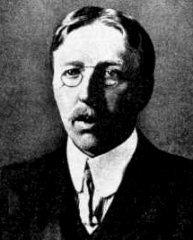
Ford Madox Ford
Ford Madox Ford

Ford Madox Ford was an influential British novelist known for his contributions to modernist literature. His works are characterized by complex narrative structures and profound psychological descriptions. Born on December 17, 1873, he passed away on June 26, 1939. more

You May Also Like

“But too often men react to women in positions of power with misogyny, often in sexualized terms. I have heard men in such situations talk about how "I'd like to fuck that bitch and teach her a lesson," for example. That kind of reaction demonstrates that no matter what the class position of a man and woman, men can use the weapon of sexualized violence to attempt to assert their dominance.”

“My dis-interest in what people speak of as "women's problems," "women's literature." Have women a special sensibility? No. There are individuals uniquely talented & uniquely equipped to interpret the complex symbolism of the world but they are certainly not determined by gender. The very idea is astonishing. [...] Energy, talent, vision, insight, compassion, the ability to stay with a single work for long periods of time, the ability to be faithful (to both one's writing and one's beloved)--these have nothing to do with gender. [...] The sensibility of a Virginia Woolf, for instance. It's her own, it's uniquely hers. Not because she is a "female" but because she is, or was, Virginia Woolf. Not more sensitive than Henry James or Proust or James Joyce, consequently not more "feminine" in the narrow & misleading sense people use that term today....But then I suppose critics must have something to write about. [...]”

“If art is not to be life-enhancing, what is it to be? Half the world is feminine--why is there resentment at a female-oriented art? Nobody asks The Tale of Genji to be masculine! Women certainly learn a lot from books oriented toward a masculine world. Why is not the reverse also true? Or are men really so afraid of women's creativity (because they are not themselves at the center of creation, cannot bear children) that a woman writer of genius evokes murderous rage, must be brushed aside with a sneer as 'irrelevant'?”

“I have found that battling despair does not mean closing my eyes to the enormity of the tasks of effecting change, nor ignoring the strength and the barbarity of the forces aligned against us. It means teaching, surviving and fighting with the most important resource I have, myself, and taking joy in that battle. It means, for me, recognizing the enemy outside and the enemy within, and knowing that my work is part of a continuum of women’s work, of reclaiming this earth and our power, and knowing that this work did not begin with my birth nor will it end with my death. And it means knowing that within this continuum, my life and my love and my work has particular power and meaning relative to others.”