Quotessence
Home / Quotes / Quote by Nouman Ali Khan

Quote by Nouman Ali Khan

“I have some advice for the young generation who are wanting to become successful in life: become more grateful. Once you do that, Allah says, "If you are grateful, I will surely increase you (in everything)." If you're having a hard time in math, science, language and whatever else, become grateful to Allah and He will open doors for you. You'll even get better at basketball and become more athletic. I pray that Allah makes you grateful young people who are examples for others all over the world, ameen.”

Quote by Nouman Ali Khan

Author
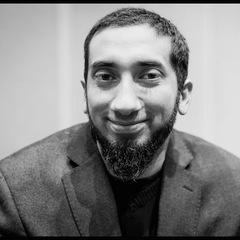
Nouman Ali Khan
Nouman Ali Khan

Nouman Ali Khan is a renowned instructor, born on May 4, 1978. He is highly regarded for his insightful teachings and profound understanding of Islamic knowledge. more

You May Also Like

“Osons non seulement couper les branches de nos malheurs, mais arracher tous les filaments de leurs racines. Peut-être pourtant en restera-t-il quelque chose, tellement sont profondes les souches de la déraison ; mais il ne restera que le nécessaire. Ainsi tiens pour certains que, si l'âme ne guérit pas (ce qui est impossible sans la philosophie), il n'y aura pas de fins à nos misères. Aussi, puisque nous avons commencé, confions-nous à elle pour être soignés ; nous guérirons si nous le voulons.”

“Madge s'approcha du buffet, où trônaient une cruche et des bols. Les yeux fixés au mur, elle enchaîna : "Voulez-vous savoir le plus étrange ? Après leur mort, je ne pouvais plus réciter le Notre Père... Fiat voluntas tua : 'Que votre volonté soit faite.' Ces mots, je les comprends, ajouta-t-elle la gorge nouée ; mon père m'a appris le latin. J'étais incapable de les prononcer ! Dieu m'avait enlevé ma famille. La torture était suffisante sans que j'y rajoute de mon propre chef celle de l'approuver." Ses yeux s'embuèrent de larmes au souvenir de cette terrible épreuve. "Je n'avais pas envie que la volonté de Dieu s'accomplisse ; je voulais retrouver mes enfants. 'Que votre volonté soit faite !' A la fin de la prière, je ne pouvais me résoudre à dire : 'Ainsi soit-il', quitte à aller en enfer.”

“My parents did their best to feed their children’s bodies, minds, and hearts, every day, whether they felt like it or not. Now that I have had children, I am in awe of how consistently they did this at such a young age, without complaint. They made a commitment to each other and to my brother and myself, and they kept it. I do not know what this cost them. I may never know. But having had children of my own, I know how hard it is some days to do what has to be done. Many of my parents’ generation were raised with a belief that was both curse and blessing: commitments were to be fulfilled, duties carried out. There was no choice. When we are convinced there is no choice, we waste less energy on wondering what to do and railing against that which needs to be done. This is the blessing we have when the rules are clear, the duties delineated. But there is another side to the ease we feel when our duty is laid out for us. If the strict parameters of what is expected do not fit us, we must shape ourselves to meet them, regardless of the costs. My mother, if she did not by nature fit the role of full-time homemaker, successfully managed the Herculean task of bending to meet it, without losing her enthusiasm for life, her ability to experience joy. Other women and their children were not so fortunate. Behind closed doors, within spotless rooms, many of my friends mothers drowned the pain of not living who they were with alcohol and prescription drugs, and they sometimes descended into illness and suicide. Many of the women of my generation are torn apart daily by the choices available to us, choices I am nevertheless grateful to have. When I went to work, I felt worried and guilty about leaving my children at daycare. When I stayed home I thought I would go out of my mind with the mental boredom, the struggle to live without enough money, and the worry that I would never be able to go back into the workplace and make a living. I had inherited my parents’ values in a world with so many more choices and demands, plus my own expectations that I could, and should, develop my own interests and talents. So, I tried to do it all - to keep a house and care for my children according to the standards required of a full-time homemaker, to attend classes to develop my skills, and to work to provide money and financial security. And I got sick – very, very sick. One of the gifts of lying on the floor too ill to get up with two young children to look after is the ease and clarity with which you know what really does have to be done. No, when I work with men and women who are worn out with too much work and worry, you tell me all the things they have to do, I tell them, “You know, very little actually has to be done.” I found out when I was ill that cookies do not have to be baked, floors do not have to be spotless, PTA meetings do not have to be attended, the dish drainer does not have to be emptied, meals do not have to be exotic and innovative. Too ill to do anything that did not have to be done, I did the impossible: I lowered my standards.”