Quotessence
Home / Quotes / Quote by Neil Gaiman

Quote by Neil Gaiman

Work

The Truth Is a Cave in the Black Mountains

This novel delves into themes of truth, deception, and the human psyche, as it follows a protagonist on a perilous journey to uncover the secrets hidden within a cave in the Black Mountains. more

Author
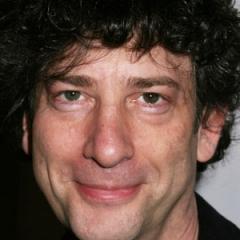
Neil Gaiman
Neil Gaiman

Neil Gaiman, born on November 10, 1960, is a renowned British author. His works span across various genres including fantasy, horror, and science fiction, with notable titles such as 'American Gods' and 'Good Omens'. Gaiman's writing style is distinctive and has won him a dedicated fan base. more

You May Also Like

“We must know something about malevolence, about how to recognize it, and about how not to make excuses for it. We must know that we cannot expect fair play. That is, perhaps, most crucial of all. Those of us who practice in this field must face the implications of the fact that we are dealing with sexual abuse. Child sex offenders-people who exploit children’s bodies and betray their trust-are not going to hesitate to lie outright. This is obvious but nonetheless frequently seems to catch people by surprise. Confessions of a Whistle-Blower: Lessons Learned Author: Anna C. Salter. Ethics & Behavior, Volume 8, Issue 2 June 1998”

“One peculiarity of our present [ethical] climate is that we care much more about our rights than about our 'good'. For previous thinkers about ethics, such as those who wrote the Upanishads, or Confucius, or Plato, or the founders of the Christian tradition, the central concern was the state of one's soul, meaning some personal state of justice or harmony. Such a state might include resignation or renunciation, or detachment, or obedience, or knowledge, especially self-knowledge. For Plato there could be no just political order except one populated by just citizens.... Today we tend not to believe that; we tend to think that modern constitutional democracies are fine regardless of the private vices of those within them. We are much more nervous talking about our good: it seems moralistic, or undemocratic, or elitist. Similarly, we are nervous talking about duty. The Victorian ideal of a life devoted to duty, or a calling, is substantially lost to us. So a greater proportion of our moral energy goes to protecting claims against each other, and that includes protecting the state of our soul as purely private, purely our own business.”