Quotessence
Home / Quotes / Quote by Johann Gottlieb Fichte

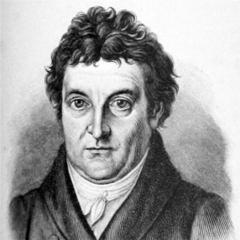
Quote by Johann Gottlieb Fichte

“Act! act!—it is to that end we are here. Should we fret ourselves that others are not so perfect as we are, when we ourselves are only somewhat less imperfect than they? Is not this our greatest perfection,—the vocation which has been given to us,—that we must labour for the perfecting of others? Let us rejoice in the prospect of that widely extended field which we are called to cultivate! Let us rejoice that power is given to us, and that our task is infinite!”

Quote by Johann Gottlieb Fichte

Work

The Vocation of Man

Browse quotes and source details for this work. more

Author

Johann Gottlieb Fichte

Johann Gottlieb Fichte was a German philosopher who is considered one of the founders of German classical philosophy. His ideas have had a profound impact on German philosophy and the entire Western philosophical tradition. He was born in May 1762 and died on January 27, 1814. more

You May Also Like

“Often emphasis on identity and lifestyle is appealing because it creates a false sense that one is engaged in praxis. However, praxis within any political movement that aims to have a radical transformative impact on society cannot be solely focused on creating spaces wherein would-be radicals experience safety and support. Feminist movement to end sexist oppression actively engages participants in revolutionary struggle. Struggle is rarely safe or pleasurable.”

“Mere sitting at home and meditating on the divine presence is not enough for our time. We have to come to the end of a long journey and see that the stranger we meet there is no other than ourselves—which is the same as saying that we find Christ in him. For if the Lord is risen, as He said, He is actually or potentially alive in every man.”

“The fracture between theology and oikonomia, being and action, insofar as it makes the praxis free and 'anarchic', opens in fact, at the same time, the possibility and necessity of its government. In a historical moment that witnesses a radical crisis of classical conceptuality, both ontological and political, the harmony between the transcendent and eternal principle and the immanent order of the cosmos is broken, and the problem of the 'government' of the world and of its legitimization becomes the political problem that is in every sense definitive.”