“…And for my part I always find home depressing, not for its fault entirely, but entering it is to leave the harmless universe of make believe I inhabit & encounter the real world where children are reared & are a nuisance but will be alive after you are dead, & where people grow old & have to be looked after not because you like them but because they are breaking up, & where style in words & behaviour counts for nothing at all. But what I dislike about my bunch is that they are PHYSIOLOGICALLY AND PSYCHOLOGICALLY INCAPABLE OF ENJOYING THEMSELVES. They have nothing nearly so wrong about them as you say yr Mother has, yet they go about thrashing themselves into deeper ecstasies of misery till I want to shake them till their teeth chatter. Letters to Monica, 28 December 1950”
Quote by Philip Larkin
Work
This book presents a rare glimpse into the personal life of the renowned poet Philip Larkin, through his correspondence with Monica Jones. The letters reveal a complex and deeply personal relationship, offering insights into Larkin's thoughts, feelings, and experiences. more
Author
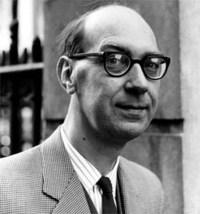
Philip Larkin (August 9, 1922 – December 2, 1985) was a renowned English poet, novelist, and librarian. He is widely regarded as one of the greatest poets of post-war Britain, known for his concise, bleak, and ironic style. Born in Coventry, Larkin studied at St John's College, Oxford. His major works include the poetry collections 'The Whitsun Weddings' and 'High Windows', and the novel 'Jill'. He spent most of his career as librarian at the University of Hull. Larkin's poetry often explores themes of death, loneliness, love, and the absurdity of everyday life. He rejected modernism in favor of traditional forms, and his precise, musical language earned him the Queen's Gold Medal for Poetry. His work continues to influence poets and readers worldwide. more
You May Also Like
“Is it essential that I write?”
“The weather is frosty: straight pink smoke puffs and the air tastes of sugar-glazed cranberries.”