Quotessence
Home / Quotes / Quote by C.J. Sansom

Quote by C.J. Sansom

Work

Tombland

Browse quotes and source details for this work. more

Author

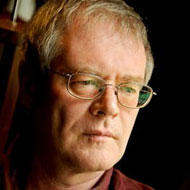
C.J. Sansom
C.J. Sansom

C.J. Sansom is a British writer renowned for his historical novels set in medieval England. Born in 1952, he has made a name for himself with his intricate and captivating narratives that frequently explore the political and social intricacies of the era. Sansom's writing is celebrated for its thorough historical research and compelling storytelling. more

You May Also Like

“Pathological people made the pathological ghetto, segregationists say. The pathological ghetto made pathological people, assimilationists say. To be antiracist is to say the political and economic conditions, not the people, in poor Black neighborhoods are pathological. Pathological conditions are making the residents sicker and poorer while they strive to survive and thrive, while they invent and reinvent cultures and behaviors that may be different but never inferior to those of residents in richer neighborhoods. But if the elite race-classes are judging the poor race-classes by their own cultural and behavioral norms, then the poor race-classes appear inferior. Whoever creates the norm creates the hierarchy and positions their own race-class at the top of the hierarchy.”

“The preposterous distinctions of rank, which render civilization a curse, by dividing the world between voluptuous tyrants, and cunning envious dependents, corrupt, almost equally, every class of people, because respectability is not attached to the discharge of the relative duties of life, but to the station, and when the duties are not fulfilled the affections cannot gain sufficient strength to fortify the virtue of which they are the natural reward. Still there are some loop-holes out of which a man may creep, and dare to think and act for himself; but for a woman it is an herculean task, because she has difficulties peculiar to her sex to overcome, which require almost super-human powers.”

“We know that the sensibility of the psyche depends for its intensity upon the liveliness, for its scope upon the richness, of the imagination. The preponderance of the analytical faculty must, however, of necessity, deprive the imagination of its energy and warmth, while a more restricted sphere of objects must reduce its wealth. Hence, the abstract thinker very often has a cold heart, since he dissects his impressions, and impressions can move the soul only as long as they remain whole; while the man of practical affairs often has a narrow heart, since his imagination, imprisoned within the unvarying confines of his own calling, is incapable of extending itself to appreciate other ways of seeing and knowing.”

“It is true that Harvard and Yale, as well as other upper-class institutions, offer free tuition, some cash scholarships, and nominal paid employment to the highest-ranking graduates of accredited secondary schools, without regard for the social class origins of these students. One can, it is true, meet a coal miner's or a farmer's son at Harvard, although it is a rare experience. The task of Yale and Harvard, however, is to mold these bright youngsters into unconscious servitors of the ruling class—as lawyers, as corporate scientists, as civil servants, as brokers, bankers, and clergymen. The enforced "democratic" mingling effected by the new house plans assures this result more positively now than ever, for in the past, many students were made to feel like pariahs by their exclusion from the quasi-aristocratic clubs.”

“Girls like me were a waste of time for doctors. With no money and no connections - otherwise we wouldn't accidentally end up on their doorstep - we were a constant reminder of the law that could send them to prison and close down their practice for good. They would never tell us the truth, that they weren't prepared to sacrifice their career for some young doe-eyed damsel foolish enough to get knocked up. Or maybe their sense of duty was such that they would have chosen to die rather than break a law that could cost women their lives. They must have assumed that most women would go through with the abortion anyway, in spite of the ban. All in all, plunging a knitting needle into a womb weighed little next to ruining one's career.”