Quotessence
Home / Quotes / Quote by Fyodor Dostoevsky

Quote by Fyodor Dostoevsky

“You may, perhaps, have really suffered, but you have no respect for your own suffering. You may have sincerity, but you have no modesty; out of the pettiest vanity you expose your sincerity to publicity and ignominy.”

Quote by Fyodor Dostoevsky

Work

Notes from the Underground

Browse quotes and source details for this work. more

Author
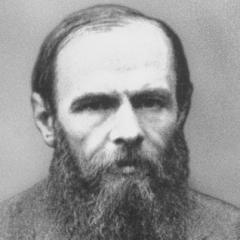
Fyodor Dostoevsky
Fyodor Dostoevsky

A renowned Russian novelist and a pioneer of psychological novels. His works deeply reveal the complexity of human nature and the injustice of society, having a profound impact on literature worldwide. more

You May Also Like

“Jake tried to pull away from the clutching hand and went sprawling on the Tick-Tock Man's throne. His eye fell on a pocket which had been sewn into the right-hand arm-rest. Jutting from the elasticized top was the cracked pearl handle of a revolver. "Oh, cully, how you'll suffer!" the Tick-Tock Man whispered ecstatically. The O of surprise had been replaced by a wide, trembling grin. "Oh how you'll suffer! And how happy I'll be to...WHAT--?" The grin slackened and the surprised O began to reappear as Jake pointed the cheesy nickel-plated revolver at him and thumbed back the hammer. The grip on Jake's ankle tightened until it seemed to him that the bones there must snap. "You DASN'T!" Tick-Tock said in a screamy whisper. "Yes I DO," Jake said grimly, and pulled the trigger of the Tick-Tock Man's runout gun. There was a flat crack, much less dramatic than the Schmeisser's Teutonic roar. A small black hole appeared high up on the right side of Tick-Tock's forehead. The Tick-Tock Man went on staring up at Jake, disbelief in his remaining eye. Jake tried to make himself shoot him again and couldn't do it. Suddenly a flap of the Tick-Tock Man's scalp peeled away like old wallpaper and dropped on his right cheek. Roland would have known what this meant; Jake, however, was now almost beyond coherent thought. A dark, panicky horror was spinning across his mind like a tornado funnel. He cringed back in the big chair as the hand on his ankle fell away and the Tick-Tock Man collapsed forward on his face. The door. He had to open the door and let the gunslinger in. Focusing on that and nothing but, Jake let the pearl-handled revolver clatter to the iron grating...”

“Loneliness Psychology (No-Nonsense Sonnet) Being happy alone is no sign of genius, It is either narcissism or hypocrisy. You've got to be extremely selfish, To be happy without human company. If your heart is alive and human, Loneliness will cause you misery. It's only the self-absorbed animal, Who don't need people to be happy. It's okay if you are alone and miserable, It is but a healthy mind's healthy reaction. Do not romanticize it with phony philosophy, For derangement starts with self-deception. Fact of the matter is - I suffer, therefore I am. Life is but a cosmic dance between dusk and dawn.”

“It can be difficult to speak truth to power. Circumstances, however, have made doing so increasingly necessary.”

“Isn’t much of our great poetry just a rich description of the ‘self’ in fall? The art keeps alive the feeling of complete control. Yet it is only lyrical mastery of the destruction of the place we thought our home. Our universal lament, the unwantedness of a world where a soul must suffer to grow. The beloved song, resonating the reverberations of a breaking heart.”

“The third Preface for Easter tells us that Jesus is ‘still our priest, our advocate who always pleads our cause. Christ is the victim who dies no more, the Lamb once slain who lives forever.’ The original Latin is more paradoxical: Jesus is ‘agnus qui vivit semper occisus’; the lamb who lives forever slain.’ If the risen Lord did not still have his wounds, then he would not have much to do with us now. The resurrection might promise us some future healing and eternal life, but it would leave us now alone in our present hurting. But because of Easter Day we already share in the victory. He still shares our wounds and we share his victory of death. We too are now wounded and healed. When Brian Pierce OP first went to Peruvian Andes, he was surprised by the ubiquitous images of the crucified Christ, covered with blood. It seemed as if the faith of these indigenous people stopped prior to the resurrection and they were left only with images of defeat. But he learned that he was wrong. These crosses are signs of how the risen Christ is now sharing their crucifixion. We can have courage and risk getting hurt. Charles Peguy, the French writer, told the story of a man who died and went to heaven. When he met the recording angel he was asked, ‘Show me your wounds.’ And he replied, ‘Wounds? I have not got any.’ And the angel said, ‘Did you never think that anything was worth fighting for?”