Quotessence
Home / Quotes / Quote by Graham Greene

Quote by Graham Greene

“You know, if you live in a place for long you cease to write about it.' 'Of course I always like to know what the man on the spot has to say,' he replied guardedly. 'And then check it with York?' 'Yes.”

Quote by Graham Greene

Work

The Quiet American

This novel delves into the complexities of the Vietnam War era, focusing on the intertwining lives of a British journalist and an American photojournalist amidst the backdrop of political intrigue and colonial power struggles. more
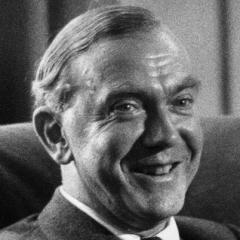
Author

Graham Greene
Graham Greene

Graham Greene was a renowned British writer born on October 2, 1904. His works are characterized by deep insight and unique narrative techniques, and he is hailed as one of the greatest novelists of the 20th century. Greene's writing spans a variety of themes, including spy novels, religious novels, and noir novels. more

You May Also Like

“Paul believed American greatness and the ghosts of that greatness surrounded him. But who could publicly express such a belief and not be ridiculed as a patriotic fool? Paul believed in his fellow Americans, in their extraordinary decency, in their awesome ability to transcend religion, race, and class, but what leftist could state such things and ever hope to get laid by any other lefty?”

“These practices persisted for thousands of years, and it is a logical consequence that our real idea about God, or our idea about “real God,” necessarily became so distorted that we cannot talk about this idea or concept with almost any certainty. In this manner, we can never know if we talk about the same thing and mean the same thing unless we speak to people with the same opinions and way of thinking (followers).”

“American exceptionalism embraces a work-centered soteriology, believing that the United States of American has earned a special status before God, attaining favor through her exceptional actions. This assumption stands in stark contrast to the humility and dependence on God revealed in the book of Lamentations.”

“We cannot "solve" the problem of race in America while ignoring our deep and painful history. Our tendency to ignore our tainted history may arise from a warped self-perception. We do not need to deal with our tainted past because we have risen above that problematic history and moved to a postracial, colorblind America. An assumed exceptionalism belies the belief that we do not have to deal with our history because through our exceptional status we have overcome the past. The destruction of black bodes and black minds can be justified because their sacrifice helped to build our exceptional nation.”