Quotessence
Home / Authors / Claudia Rankine
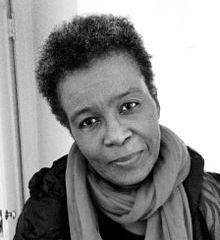
Claudia Rankine

Claudia Rankine Quotes

Poet

Filter quotes by topic

Famous Claudia Rankine Quotes

“I think of the described dynamics as a fluid negotiation. I don't think these specific interactions can happen to the black or brown body without the white body. And there are ways in which, if you say, "Oh, this happened to me," then the white body can say, "Well, it happened to her and it has nothing to do with me." But if it says "you," that you is an apparent part of the encounter.”

“I think words are the thing that either triumphs for you, in your desire to communicate something, or fails. I love language because when it succeeds, for me, it doesn't just tell me something. It enacts something. It creates something. And it goes both ways. Sometimes it's violent. Sometimes it hurts you. And sometimes it saves you.”

“When you achieve it fully, you create something that's transparent - that people can move into and through their own experiences. As a writer, I don't want people spending time thinking, "What does she mean?" I want, in a way, my text to go away. So that the words on the page become a door to one's own internal investigation. It's just a passage. If the work does its job, it just opens.”

“Whereas if you were writing an op-ed piece or an essay, somebody would be asking, "What's your point?" With poetry you can stay in a moment for as long as you want. Poetry is about metaphor, about a thing standing in for something else. It's the thing that opens out to something else. What that something else is changes for readers. So what's on the page - it falls away.”

“In the future, we've forgotten it. It's disappointing to find out that the past is the present is the future. Nobody wants that. And yet, that's what it is. Maybe it's a kind of surrealist move, to use language like "post-racial" - thinking that if you create the language for it, it will happen. I wish it worked that way. But that's not our reality.”

“The subject who speaks is situated in relation to the other. This privilege of the other ceases to be incomprehensible once we admit that the first fact of existence is neither being in itself nor being for itself but being for the other, in other words, that human existence is a creature. By offering a word, the subject putting himself forward lays himself open and, in a sense, prays.”

“Yes, and the body has a memory. The physical carriage hauls more than its weight. The body is the threshold across which each objectionable call passes into consciousness—all the unintimidated, unblinking, and unflappable resilience does not erase the moments lived through, even as we are eternally stupid or everlastingly optimistic, so ready to be inside, among, a part of the games.”