Quotessence
Home / Authors / Dejan Stojanovic
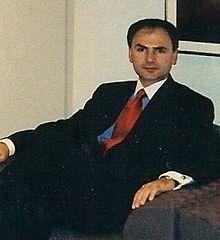
Dejan Stojanovic

Dejan Stojanovic Quotes

Poet

Filter quotes by topic

Famous Dejan Stojanovic Quotes

“Why not accept this illusion in all its glory and as it is: real that cannot be more real regardless of all the “tricks” we think it pulled on us? Without all the devices and “instruments” the Universal Mind or the Being “pulled off” to “create reality,” we would not be able to experience all the beauty, glory, and miracles of existence. This illusion is the noblest thing reality can do for us. We must accept that we are real regardless of our awareness of what constitutes reality. Our knowledge does not make us less real. Our awareness shall not create more distance between us and the world. Quiet to the contrary, our awareness shall be a bridge for a fuller life and connection to the Ultimate source from which everything originates. This Source is not only the source of Everything but also the Source of peace and bliss. Even on an individual level, this realization leads to a better connection with oneself in light of the ultimate Oneness of Everything. Oneness is bliss in peace and peace in bliss.”

“Infinity does not exist in actuality. Infinity is only the potential of a Universal Mind. Since it is immaterial and not a slave to the space-time continuum and its properties, it is not dimensional and can be finite and infinite simultaneously. Since time and space have no meaning in the absolute state of a Universal Mind, then its finitude or infinity is almost irrelevant and of no importance.”

“Infinity is a mathematical, spatial, and temporal impossibility except as a concept. It is absurd if understood as an actuality (the universe, the world). Even if we try to imagine the infinity of the Universal Mind as “actuality” playing out all its potential simultaneously, that is impossible because infinity is both theoretically and practically unreachable.”

“The Universal Mind saves its uttermost purpose and meaning more through its potential than its actuality. Actuality can be one and many. All these real and potential actualities are limited, and their finitude will eventually make them disappear. Through its potential for infinity, the Universal Mind can exercise, not only simultaneously but perpetually, innumerable and always different (although based on the same laws) manifestations of becoming.”

“Although the Universal Mind is a Being, it is not concerned with becoming because it already is. Since the purpose and meaning of the Being, Universal Mind, as it is in its absolute state, is lost, it must either transform itself or produce from itself the world as we see, perceive, and experience it. This process, purpose, or true meaning may be called the rejuvenating process of the Ultimate Being by always becoming new through rebirths (in different ways following the potential) ad infinitum.”

“From the standard view of the main religions, God created the Universe. Based on this standard, the Universe is material, but the Creator is immaterial. On the other hand, we can imagine that the Universe has always existed, and if that were the case, there was no creator to create it; “it simply is” (Bertrand Russell). We certainly know that the Universe, regardless of whether it was created by God or not (always existing without a cause), is evolving. The Universe is not static. The Universe is the source, the cause, and an inexhaustible reservoir of energy, possibilities, and life. Although it sounds paradoxical, the Universe is “physical” and non-physical. As such, it contains metaphysics in its very Being. The physical feature of the Universe is only an expression of its metaphysical, "ethereal," nonphysical nature (the Kantian being-in-itself); physics is its appearance, and metaphysics is its essence. (The appearance is in motion, yet the essence is static. Motion [in the classical “physical” sense] is possible in the world of physics and impossible in metaphysics [immaterial world].) Based on our perceptions and beliefs, the starting point cannot change the nature of the Universe. Created or uncreated, the Universe is. The Universe would never be different, regardless of our point of view; only our ideas about the Universe may change. The more important question is whether our concept of the Universe would be different if we changed our starting position. Could the Universe potentially be different depending on these two starting points? Either way, if God created it or it always existed in one form or another, the Universe may show and possess the same qualities, in which case this dichotomy would not be substantially important, except formally. The third idea could imply God in the Universe (not in the strict sense of Spinoza's pantheism) and the Universe in God. What does this mean? It means that the Universe is, in either case, a manifestation of something that has always existed. If something never existed, it would not be able to come into Being. Absolute nothingness cannot give birth to anything, either God or the Universe. If this were the case, then Nothingness would be the first cause. If God is the first cause and source of everything, then based on this logic, God would be nothing because God came from nothing. On the other hand, if the Universe came from nothing, the Universe would be nothing. Only nothing can come from nothing. Nothing is incapable of creating or making anything. Therefore, the question of who created God or who created the Universe is, at best, counterproductive and sterile. From this hypothetical point of view, it would not matter if God created the Universe. If God or the Universe always existed in some way or another, the critical question would be whether there is any difference between God, understood in this way, and the Universe. For if God always existed, what would make it so distinctly and inherently different from the Universe? Or if the Universe always existed, what would make it inherently different from God?”

“Based on our perceptions and beliefs, the starting point cannot change the nature of the Universe. Created or uncreated, the Universe is. The Universe would never be different, regardless of our point of view; only our ideas about the Universe may change. The more important question is whether our concept of the Universe would be different if we changed our starting position. Could the Universe potentially be different depending on these two starting points? Either way, if God created it or it always existed in one form or another, the Universe may show and possess the same qualities, in which case this dichotomy would not be substantially important, except formally. The third idea could imply God in the Universe (not in the strict sense of Spinoza's pantheism) and the Universe in God. What does this mean? It means that the Universe is, in either case, a manifestation of something that has always existed. If something never existed, it would not be able to come into Being. Absolute nothingness cannot give birth to anything, either God or the Universe. If this were the case, then Nothingness would be the first cause. If God is the first cause and source of everything, then based on this logic, God would be nothing because God came from nothing. On the other hand, if the Universe came from nothing, the Universe would be nothing. Only nothing can come from nothing. Nothing is incapable of creating or making anything. Therefore, the question of who created God or who created the Universe is, at best, counterproductive and sterile.”

“If we try to answer these questions, we will again be faced more with our inherited ideas about the Universe and God than with the reality and essence these terms should represent. Therefore, we should try to enrich and redefine these and many other terms we use. We, human beings, decided that the word (term, idea) God means, and should mean, something inherently different from the Universe. We also decided that the Universe means and should mean something different from God. But, if we, somewhat arbitrarily, determined not only the destiny of these terms and ideas but, based on them, our very conception and perception of what these ideas and terms are supposed to represent, one may ask how much closer these ideas and reasoning have brought us to the truth.”

“Once we have established our ideas and definitions, the main underlying question is whether our goal has been more in preserving and fighting for the preservation of our concepts and already established ideas as they are or in finding out if they represent the truth as it is and ought to be and not only as it is defined, arbitrarily declared, proclaimed or prescribed? If we get rid of all dogmas and established paradigms, we can conclude that what we seek must be the truth itself, regardless of how well or to what degree it would fit our views, concepts, and beliefs.”

“We must notice that religious thought, for instance, as presented by their most elaborate, learned, and sophisticated proponents, regardless of the grasp and superb philosophical knowledge (St. Augustine and St. Thomas Aquinas are extraordinary examples), did not, even with the best efforts to fight dogma and go from strictly philosophical positions, try to conceive God as something different from God as presented in Christianity or the Bible. A similar situation exists with the other predominant monotheistic religion, Islam. Based on this logic, as a subject of philosophical inquiry, God became a priori a question of how to establish the right to God more than how to set the truth (the right to the truth) itself.”

“Everything singular can be conceived and, sooner or later, comprehended by thought. Everything that is not true has the potential to be disclosed as such—not accurate. However, in its totality, the final, absolute truth is beyond reach—it is hiding and shifting. Still, as perfection, the Absolute cannot be untrue because, in that case, it would not be perfection. Therefore, it must be perfect and true at the same time. It is possible to conceive the Absolute as the truth. In this sense, it is possible to conceive that Nothing is the truth.”

“Just of itself—nothing is nothing, but just of itself, something, even the biggest something or God, is nothing too. Nothing is uncreated and doesn’t need a creator. However, the world would not be possible without this uncreated Nothing, regardless of God’s “omnipotence.” Since God cannot create nothingness, its omnipotence is contingent upon nothingness. If omnipotence is contingent upon anything, it is not absolute omnipotence, even if this anything is nothing.”

“The world from nothing is impossible, and life from nonlife is impossible. The world was always here, in one way or another, and nothingness was always here. The World is the Universal Mind’s “program” of the Absolute that, by involving nothingness, becomes the Universe. However, the Universe still bears all that is known and unknown to us with the spark of life in it.”

“We mostly envision infinity as something beyond our reach and in outer space. However, if it existed, infinity would have to expand on a micro-level within something we may imagine as the inner space. If we say it this way, infinity cannot be only outside; it must also be “inside” with no end to the material universe anywhere in outer space and on its micro-level. It also means that, if we simplify the idea, the tiniest particles, quarks, “strings,” or waves, would be larger, compared to what they contain within themselves, than the visible Universe in comparison to us.”

“Without the original impetus from the Universal Mind, matter would be lifeless, immobile stuff, even if it somehow existed independently, and space would only be emptiness or absolute void, unaffected or minimally affected by the created world or universe. What powers the Universe is the main force, the source of all forces, and Everything. All the rest is an illusion, and our interpretation is a consequence of our senses and thinking. Our world is a program of an Absolute, Universal Mind working with the Absolute Void (its only means) to create the World. The main unifying force enabling all this is the Absolute itself.”

“Senses make perceptions possible with feelings, emotions, and thoughts in humans. From an earthly point of view, senses empower the higher levels of life, conditionally speaking. However, what empowers the world is the possibility of and for relationships. If the absolute world is ultimate and one, relations are not possible. Any division of oneness is, in a way, the opposite of the absolute. The Absolute must stay intact to be absolute, but the Absolute is “dead” at the point of its absoluteness, which is Zero. Absolute nothingness is dead at the Zero point of its absoluteness. The absolute Being (God) is “dead” at the point of its absoluteness, which is Zero. The whole Triad of the Absolute, with its components of God and Nothingness, is Zero if it is only the Absolute without established relations within itself.”

“Every part of the Absolute is connected and interconnected through the intrinsic value of everything that exists. The absolute value of the finite is absolute in its finitude and infinitude. Its finiteness makes connection and relationships (life) possible in the absolute sense. The infiniteness of the finite is absolute because it lies in the ability of the finite to resemble the infinite in its potential for variations. Every finite value is potentially infinite.”

“The Absolute, without life, is dead not only because of its power, omnipotence, and omniscience but also because of its absolute finiteness. The Absolute is the most finite thing. The totality of power and knowledge makes the absolute obsolete. Its total knowledge is its ultimate limit. Its total power excludes purpose and meaning. There is no purpose and meaning in absolute knowledge and power. The purpose is already there in the Absolute, that which should be longed for.”

“Everything in nature coexists with something else. Our perceptions come from relations. We must see and perceive what we experience in specific ways; slight differences don’t count. What we see is not a matter of choice for the most part—to see the world, to feel heat, cold, and fear. All that exists has its frequency and structure within a larger structure. Since there is a connection between everything, the existence of one depends on the effect it makes on another in a very peculiar way. This effect is more of a result when the impacted one is the source of life and existence for the One that initially caused and produced it all.”

“Schopenhauer’s will can be “equated” to the categorical imperative of the idea (reason), which is the will. Without the will, the idea is dead. If the idea is the essence of the Being, then the will is its manifestation as existence. Only through the categorical will of the essence (ultimate universal idea) is existence possible.”

“All we see is an "illusion" but a beautiful, meaningful, and purposeful illusion, no less real and realistic if it were the other way. The most important thing is the existence and rejuvenation of the ultimate, primordial immaterial essence. Transformation of this essence and power (supreme primary quality), similar from a human point of view to "alchemy," does not undermine the value and reality of matter and the Universe. In this sense, we believe that the ultimate immaterial Being is omnipotent and capable of creating and recreating itself through different modes of transformation. The most important transformation is the transformation of the essence into existence.”

“There is nothing beyond the Absolute. There can be no purpose, meaning, or hope if there is nothing beyond it. Purpose, meaning, and hope can only exist in relativity. Without relativity, these terms or states have no meaning. Relationships create purpose, meaning, and hope. Whenever or wherever there is a relationship, it means there is something beyond, something more significant to hope for, something to pursue and build meaning and hope through that pursuit.”

“Any dimension or number is a relative category. The number is absolute in its absolute volume, but it has its absolute volume only as a sign. No number is absolute; every number gains meaning in relations and only exists in relationships. Only the infinity is absolute and “contains every number” (potentially), but there is no last number. Infinity, as a manifestation in any of its variations, possibilities, and cycles, cannot be reached because infinity is an absolute potential. It is not possible to reach the last number. If there were the last number, there would be no infinity. Although there can be no infinite regress, there can be infinite “progress.” The idea of the infinite regress is the intellectual construct or attempt to reconstruct the “past conceptually.” In contrast, infinite progress is potential that may actualize up to every actualized point ad infinitum. There is no end to the potential of the Absolute.”

“An agnostic does not want to succumb to a religious heritage without proof supported by science. An agnostic is guided more by rational thinking than by emotions and religious sentiments that may or may not exist in him or her. This fight, or dilemma, in every one of us, is a fight between a believer and an atheist. Many believers are, perhaps, agnostics to some extent. They know they don’t know the truth and will never find it, but they still believe (credo quia absurdum). Faith and agnosticism do not necessarily exclude each other, as it is usually perceived, and are compatible.”

“A believer rejects the idea of disbelief merely because it is impossible to prove God’s existence or to know it in any other way except through faith. Although this may sound paradoxical, this approach is more rational than agnosticism because agnosticism excludes belief only because there is no evidence, even though providing that evidence is “impossible.” On the other hand, nobody can say, prove, or exclude the possibility of such proof.”

“All major philosophers are “right” to a greater or lesser extent. It’s not merely a matter of right and wrong but of improving thought and discoveries that lead to a clearer understanding of the world. Every major philosopher provided a bit of understanding that clarified the crucial problems, even for those who objected to the ideas of the same philosophers.”

“Opponents of the particular ideas of past philosophers may be equally indebted, to a larger or lesser extent, to the very same philosophers they oppose as those they agree with. One thing is sure—there is no complete agreement or disagreement, nor can there be one, with any of the philosophers. (Complete agreement can be expected only within purely religious thought based on the dogmas of nominal religions.)”

“The main problem lies not in the beliefs but in the conception of God. What is God? Depending on the answer to the question of what God is, our relation, not only to God but to the idea of beliefs and religions, is formed and resolved. The main obstacle to this problem comes from our concept of God and not from God or the world itself. First of all, we cannot agree on what God is. We only see, analyze, and interpret religions in their expressed forms, primarily based on revelations that serve (and must serve) as God’s given laws. In these books and “laws,” God is described, ascribed, and prescribed. As such, God is a defined and untouchable being. The status of untouchability lies in revelations by the prophets, which is to say, in “God’s own words.” That is the only legitimacy to base these laws and secure them. We have no other fact or proof except the words of the few, which we must believe and follow.”

“What do we do by following these words or rules, laws, prophets and their revelations, and religions? We only believe in those who uttered and wrote these words and revelations. However, we do not know if there were any revelations in the first place or even if they were “real” to become the measures or expressions of truth or God automatically. There is nothing beyond this secret except our belief not in God but in the people (so-called prophets).”

“These practices persisted for thousands of years, and it is a logical consequence that our real idea about God, or our idea about “real God,” necessarily became so distorted that we cannot talk about this idea or concept with almost any certainty. In this manner, we can never know if we talk about the same thing and mean the same thing unless we speak to people with the same opinions and way of thinking (followers).”

“Einstein wrote that “science without religion is lame, religion without science is blind,” but we have to remember that Einstein talks about the “cosmic religious feeling,” which is very different from the religious feeling exercised within the official religions. He explains, “[h]ow can a cosmic religious feeling be communicated from one person to another if it can give rise to no definite notion of a God and no theology? In my view, art and science's most important function is to awaken this feeling and keep it alive in those who are receptive to it.” … “I maintain that the cosmic religious feeling is the strongest and noblest motive for scientific research.” … “A contemporary has said, not unjustly, that in this materialistic age of ours, the serious scientific workers are the only profoundly religious people.” … “You will hardly find one among the profounder sort of scientific mind without a religious feeling of his own. But it is different from the religiosity of the naïve man.”

“If we accept that intelligent design is not necessarily what we think it is, or if we enrich the word (term) design to contain additional meaning in extraordinary contexts or ideas about God and creation, we may understand that design may be the design without designing, that the creation may be creation without creating in the way we see it and understand it. We admit that there can be no design without designing and no creation without creating, but what is to be created or designed in the absolute? If the Absolute is the “highest” form of “existence,” then it must be, at the same time, absolute perfection. If there is absolute perfection, what creation can match the existing perfection? We must agree that no possible outcome of the Absolute can be more perfect than the Absolute itself. Absolute itself is perfection; otherwise, it would not be absolute.”

“If the creation of the world needed to be perfect (absolutely perfect), then why create (design) to arrive at the same point of the Absolute, which would be pure idleness, an idle walk from one perfection to another or from nothing to another nothing? If the purpose of creating is not only in creating but more in existing, and not only in existing per se but in meaningful and purposeful existing, then this creating or creation must first and foremost accommodate its purpose rather than perfection itself. Its perfection must be valued and measured by and through its purpose and meaning rather than by pure perfection. Measure through purpose makes us see the deeper importance and meaning in the lack of ordinary perfection. Perfection and absolute goodness (benevolence) are not necessarily as we see them and would like to see them. When we measure ideals through purpose, the idea, function, and manifestation of perfection and purpose become more pronounced, although subtly.”