Quotessence
Home / Authors / Diane Ackerman
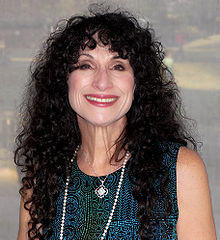
Diane Ackerman

Diane Ackerman Quotes

Author

Filter quotes by topic

Famous Diane Ackerman Quotes

“I think if you look at any facet of nature in enough detail, you find it fascinating. How could you not? The universe is so full of marvels. Here's an example -- rain, the shape of rain. I was minding my own business, working on my book, looking out the window, and it was raining and I was noticing that the raindrops were falling in that classic round-looking way, and I thought, 'I wonder if raindrops really are round?' So I started researching it a little, and I discovered that raindrops change shape 300 times a second.”

“I think that very often younger writers don't appreciate how much hard work is involved in writing. The part of writing that's magic is the thinnest rind on the world of creation. Most of a writer's life is just work. It happens to be a kind of work that the writer finds fulfilling in the same way that a watchmaker can happily spend countless hours fiddling over the tiny cogs and bits of wire. ... I think the people who end up being writers are people who don't get bored doing that kind of tight focus in small areas.”

“Look at your feet. You are standing in the sky. When we think of the sky, we tend to look up, but the sky actually begins at the earth. We walk through it, yell into it, rake leaves, wash the dog, and drive cars in it. We breathe it deep within us. With every breath, we inhale millions of molecules of sky, heat them briefly, and then exhale them back into the world.”

“We tend to think of memories as monuments we once forged and may find intact beneath the weedy growth of years. But, in a real sense, memories are tied to and describe the present. Formed in an idiosyncratic way when they happened, they're also true to the moment of recall, including how you feel, all you've experienced, and new values, passions, and vulnerability. One never steps into the same stream of consciousness twice.”

“We think of it as a sort of traffic accident of the heart. It is an emotion that scares us more than cruelty, more than violence, more than hatred. We allow ourselves to be foiled by the vagueness of the word. After all, love requires the utmost vulnerability. We equip someone with freshly sharpened knives; strip naked; then invite him to stand close. What could be scarier?”

“Despite not knowing if what he felt from moment to moment would pass or last forever, he entered fully into his shifting states of violent rage, self-pity, longing, heartbreak, cynicism, without losing the ability to think about what was happening to him. That took courage, I thought, living with the suffering in a mindful way, as an artifact of being, neither good nor bad.”

“Love is the most important thing in our lives, a passion for which we would fight or die, and yet we're reluctant to linger over its names. Without a supple vocabulary, we can't even talk or think about it directly.”