Quotessence
Home / Authors / Don DeLillo
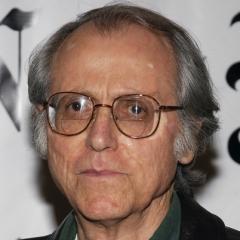
Don DeLillo

Don DeLillo Quotes

Writer

Filter quotes by topic

Famous Don DeLillo Quotes

“It is the form that allows a writer the greatest opportunity to explore human experience...For that reason, reading a novel is potentially a significant act. Because there are so many varieties of human experience, so many kinds of interaction between humans, and so many ways of creating patterns in the novel that can’t be created in a short story, a play, a poem or a movie. The novel, simply, offers more opportunities for a reader to understand the world better, including the world of artistic creation. That sounds pretty grand, but I think it’s true.”

“The novel is whatever novelists are doing at a given time. If we‘re not doing the big social novel fifteen years from now, it‘ll probably mean our sensibilities have changed in ways that make such work less compelling to us — we won‘t stop because the market dried up. The writer leads, he doesn‘t follow. The dynamic lives in the writer‘s mind, not in the size of the audience. And if the social novel lives, but only barely, surviving in the cracks and ruts of the culture, maybe it will be taken more seriously, as an endangered spectacle. A reduced context but a more intense one [...] PS [...] If serious reading dwindles to near nothingness, it will probably mean that the thing we‘re talking about when we use the word ‘identity‘ has reached an end. – Don Delillo, in a letter to Jonathan Franzen”

“We don't really know how technology will affect narrative. That's the question. See, people used to say that the novel is going to die, but they would never say that movies will die with it, when in fact all forms depend on the narrative. I think if one of them fails, the others are going to fail as well. Maybe this will happen to both forms, and maybe movies will take a totally different direction with fiction.”

“The excitement of theatre is palpable but the frustrations, and the complete absence of a definitive evening - the play as text means practically nothing in a way - , there's no particular performance that is definitive in the way a novel is a solid object you hold in your hands and here it is. You can't say that about a play. If the novel gives us a sense of throbbing consciousness, theater is pure soul, beautiful and elusive.”

“That's how you write novels actually. You suddenly hit upon something and you realize this is the path you were meant to take. You'd be a fool if you didn't follow it. Perhaps it's like solving a difficult question in pure mathematics. There must be a moment when the solution is so simple and evident that you wonder why you hadn't come upon it before. When you do come upon it, you know it in the deepest part of your being. It carries its own logic.”

“In my experience, writing a novel tends to create its own structure, its own demands, its own language, its own ending. So for much of the period in which I'm writing, I'm waiting to understand what's going to happen next, and how and where it's going to happen. In some cases, fairly early in the process, I do know how a book will end. But most of the time, not at all, and in this particular case, many questions are still unanswered, even though I've been working for months.”

“It was only after two years' work that it occurred to me that I was a writer. I had no particular expectation that the novel would ever be published, because it was sort of a mess. It was only when I found myself writing things I didn't realise I knew that I said, 'I'm a writer now.' The novel had become an incentive to deeper thinking. That's really what writing is—an intense form of thought.”