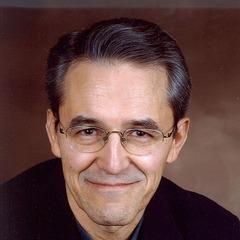
“When we speak of ordinary unqualified knowledge, my thought is that we are implicitly relativizing to the standards imposed by our evolution-derived humanity. These are standards that determine when we consider it appropriate to store beliefs just as a human being, rather than in one's capacity as an expert of one or another sort. Such stored beliefs are to be available for later use in one's own thought or in testimony to others.” HumansUseHumanityBeliefSpeakHuman BeingsEvolutionStandardsOrdinaryCapacityDetermineAvailableStoresExpertsAppropriateMy ThoughtsTestimonyUnqualified Author:Ernest Sosa
“In arriving at the relevant theory about the specifics of our faculty of vision we will presumably use our eyes to gather relevant data. Based on such data we come to know about the optic nerve, the structure of our eyes, the rods and cones, etc., so as to explain how it is that vision gives us reliable access to the shapes and colors of objects around us. In reliably arriving at that theory we thus exercise the very faculty whose reliability is explained by the theory. There is no vice in this sort of circularity.” KnowsGivingUseEyeVisionObjectsColorTheoryExerciseShapesStructureVicesAccessDataEtcFacultyNervesRelevantArrivingReliabilityConesSpecificsCircularity Author:Ernest Sosa
“Philosophers need not much use the word 'intuition' or the concept of intuition, except when they happen to be working on the epistemology of the a priori.” NeedsUseHappensConceptsPhilosopherIntuitionEpistemology Author:Ernest Sosa
“When there are conflicts of observation, when experiments cannot be replicated, scientists may then retreat to a study of the various specific observations so as to explain the conflict, in the course of which they would make use of the concept of observation, or of some specification of that concept.” MayUseCoursesStudyConflictConceptsScientistVariousExperimentsObservationRetreatSpecifications Author:Ernest Sosa
“The concept of intuition is more often used in philosophical theorizing than is the concept of observation in scientific theorizing (proportionately). One reason is that there is (proportionately) more ostensible conflict of philosophical intuitions than there is ostensible conflict of scientific observations. So much for the use of a concept of intuition in philosophical theorizing.” ReasonUseUsedConflictConceptsPhilosophicalIntuitionObservation Author:Ernest Sosa