Quotessence
Home / Authors / Francis Quarles
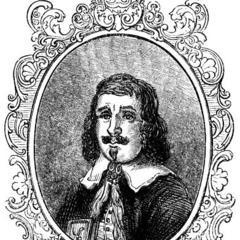
Francis Quarles

Francis Quarles Quotes

Poet

Filter quotes by topic

Famous Francis Quarles Quotes

“God hath given to mankind a common library, His creatures; to every man a proper book, himself being an abridgment of all others. If thou read with understanding, it will make thee a great master of philosophy, and a true servant of the divine Author: if thou but barely read, it will make thee thine own wise man and the Author's fool.”

“As there is no worldly gain without some loss, so there is no worldly loss without some gain; if thou hast lost thy wealth, thou hast lost some trouble with it; if thou art degraded from thy honor, thou art likewise freed from the stroke of envy; if sickness hath blurred thy beauty, it hath delivered thee from pride. Set the allowance against the loss, and thou shalt find no loss great; he loses little or nothing, that reserves himself.”

“It is a most just punishment, that man should lose that freedom, which man could not use, yet had power to keep, if he would; and that he who had knowledge to do what was right, and did not should be deprived of the knowledge of what was right; and that he who would not do righteously, when he had the power, should lose the power to do it, when he had the will.”

“If thy desire to raise thy fortunes encourage thy delights to the casts of fortune, be wise betimes, lest thou repent too late; what thou gettest, thou gainest by abused providence; what thou losest, thou losest by abused patience; what thou winnest is prodigally spent; what thou losest is prodigally lost; it is an evil trade that prodigally drives; and a bad voyage where the pilot is blind.”

“So use prosperity, that adversity may not abuse thee: if in the one, security admits no fears, in the other, despair will afford no hopes; he that in prosperity can foretell a danger can in adversity foresee deliverance.”

“The way to subject all things to thyself is to subject thyself to reason; thou shalt govern many, if reason govern thee. Wouldst thou be crowned the monarch of a little world? command thyself.”

“Demean thyself more warily in thy study than in the street. If thy public actions have a hundred witnesses, thy private have a thousand. The multitude looks but upon thy actions; thy conscience looks into them: the multitude may chance to excuse thee, if not acquit thee; thy conscience will accuse thee, if not condemn thee.”

“Wouldst thou know the lawfulness of the action which thou desirest to undertake, let thy devotion recommend it to Divine blessing: if it be lawful, thou shalt perceive thy heart encouraged by thy prayer; if unlawful, thou shalt find thy prayer discouraged by thy heart. That action is not warrantable which either blushes to beg a blessing, or, having succeeded, dares not present a thanksgiving.”

“Gaze not on beauty too much, lest it blast thee; nor too long, lest it blind thee; nor too near, lest it burn thee. If thou like it, it deceives thee; if thou love it, it disturbs thee; if thou hunt after it, it destroys thee. If virtue accompany it, it is the heart's paradise; if vice associate it, it is the soul's purgatory. It is the wise man's bonfire, and the fool's furnace.”

“If thou expect death as a friend, prepare to entertain it; if thou expect death as an enemy, prepare to overcome it; death has no advantage, but when it comes a stranger.”

“Prize not thyself by what thou hast, but by what thou art; he that values a jewel by her golden frame, or a book by her silver clasps, or a man by his vast estate, errs; if thou art not worth more than the world can make thee, thy Redeemer had a bad pennyworth, or thou an uncurious Redeemer.”

“If thou seest anything in thyself which may make thee proud, look a little further and thou shalt find enough to humble thee; if thou be wise, view the peacock's feathers with his feet, and weigh thy best parts with thy imperfections.”

“If any speak ill of thee, flee home to thy own conscience, and examine thy heart: if thou be guilty, it is a just correction; if not guilty, it is a fair instruction: make use of both; so shalt thou distil honey out of gall, and out of an open enemy create a secret friend.”

“If thy words be too luxuriant, confine them, lest they confine thee; he that thinks he never can speak enough may easily speak too much. A full tongue and an empty brain are seldom parted.”

“Though virtue give a ragged livery, she gives a golden cognizance; if her service make thee poor, blush not. Thy poverty may disadvantage thee, but not dishonor thee.”

“In the height of thy prosperity expect adversity, but fear it not. If it come not, thou art the more sweetly possessed of the happiness thou hast, and the more strongly confirmed. If it come, thou art the more gently dispossessed of the happiness thou hadst, and the more firmly prepared.”

“If thou desire not to be poor, desire not to be too rich. He is rich, not that possesses much, but he that covets no more; and he is poor, not that enjoys little, but he that wants too much. The contented mind wants nothing which it hath not; the covetous mind wants, not only what it hath not, but likewise what it hath.”

“Let the foundation of thy affection be virtue, then make the building as rich as glorious as thou canst; if the foundation be beauty or wealth, and the building virtue, the foundation is too weak for the building, and it will fall: happy is he, the palace of whose affection is founded upon virtue, walled with riches glazed with beauty, and roofed with honor.”

“I here present thee with a hive of bees, laden some with wax, and some with honey. Fear not to approach! there are no wasps, there are no hornets here. If some wanton bee chance to buzz about thine ears, stand thy ground and hold thy hands-there's none will sting thee, if thou strike not first. If any do, she hath honey in her bag will cure thee too.”