Quotessence
Home / Authors / Jacques Maritain
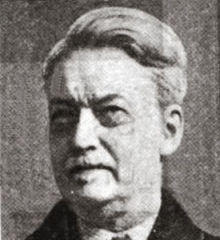
Jacques Maritain

Jacques Maritain Quotes

Philosopher

Filter quotes by topic

Famous Jacques Maritain Quotes

“Authentic Christianity has a horror of the pessimism of inertia. It is pessimist, profoundly pessimist in the sense that it knows that the creature comes from nothingness, and that all that issues from nothing essentially tends of itself to return to nothing: but it's optimism is incomparably deeper than it's pessimism; for it knows that the creature comes from God, and all that comes from God tends to return to Him.”

“If we interpret St. Augustine in material terms, by the pure light of a reason which is not truly theological but geometric, his teaching seems to annihilate the creature. As a result of original sin man is taken to be essentially corrupt; that is the doctrine of Luther, of Calvin, of Jansenius. Is not this the purest pessimism? Nature is corrupted in its essence by original sin; and under grace it remains corrupt, grace being here not life, but a covering cloak. Yes, it is the purest pessimism: but there is a singular result. Human nature before sin possessed as its due all the privileges of Adam. Now this corrupt man, who can merit nothing for Heaven, and whom faith covers with Christs grace as with a cloak, has nevertheless a value here on earth, even as he is and according to what he is, in the very corruption of his nature. Make way there for this sullied creature, since man must live in the hell which is this world! Such is the dialectic, the tragedy of the protestant conscience, with its admirably vivid and aching sense, but too purely human, too darkly human sense of mortal misery and sin. The creature declares its nothingness. But this declaration is its own. Man is a walking corruption; but this irremediably corrupt nature cries out to God, and the initiative, do what one will, is thus man’s battle cry.”

“Modern civilization is a worn-out vesture: it is not a question of sewing on patches here and there, but of a total and substantial reformation, a trans-valuation of its cultural principles; since what is needed is a change to the primacy of quality over quantity, of work over money, of the human over technical means, of wisdom over science, of the common service of human beings instead of the covetousness of unlimited individual enrichment or a desire in the name of the State for unlimited power.”

“In the final analysis, the relation of the individual to society must not be conceived after the atomistic and mechanistic pattern of bourgeois individualism which destroys the organic social totality, or after the biological and animal pattern of the statist or racist totalitarian conception which swallows up the person, here reduced to a mere histological element of Behemoth or Leviathan, in the body of the state, or after the biological and industrial pattern of the Communistic conception which ordains the entire person, like a worker in the great human hive, to the proper work of the social whole. The relation of the individual to society must be conceived after an irreducibly human and specifically ethicosocial pattern, that is, personalist and communalist at the same time; the organization to be accomplished is one of liberties. But an organization of liberty is is unthinkable apart from the amoral realities of justice and civil amity, which, on the natural and temporal plane, correspond to what the Gospel calls brotherly love on the spiritual and supernatural plane. This brings us back to our considerations of the manner in which the paradox of social life is resolved in a progressive movement that will never be terminated here-below. There is a common work to be accomplished by the social whole as such. This whole, of which human person are the parts, is not ‘neutral’ but is itself committed and bound by a temporal vocation. Thus the persons are subordinated to this common work. Nevertheless, not only in the political order, is it essential to the common good to flow back upon the persons, but also in another order where that which is most profound in the person, its supra-temporal vocation and the goods connected with it, is a transcendent end, it is essential that society itself and its common work are indirectly subordinated. This follows from the fact that the principal value of the common work of society is the freedom of expansion of the person together with all the guarantees which this freedom implies and the diffusion of good that flows from it. In short, the political common good is a common good of human persons. And thus it turns out that, in subordinating oneself to this common work, by the grace of justice and amity, each one of us is trill subordinated to the good of persons, to the accomplishment of the personal life of others an, at the same time, to the interior dignity of ones own person. But for this solution to be practical, there must be full recognition in the city of the true nature of the common work and, at the same time, recognition also of the importance and political worth--so nicely perceived by Aristotle--of the virtue of amity.”