Quotessence
Home / Authors / Jose Ortega y Gasset
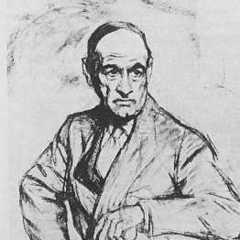
Jose Ortega y Gasset

Jose Ortega y Gasset Quotes

Philosopher

Filter quotes by topic

Famous Jose Ortega y Gasset Quotes

“Liberalism is that principle of political rights, according to which the public authority, in spite of being all-powerful, limits itself and attempts, even at ist own expense, to leave room in the state over which it rules for those to live who neither think nor feel as it does, that is to say as do the stronger, the majority.”

“The most radical division that it is possible to make of humanity is that which splits it into two classes of creatures: Those who make great demands on themselves, piling up difficulties and duties; and those who demand nothing special of themselves, but for whom to live is to be every moment what they already are, without imposing on themselves any effort towards perfection, mere buoys that float on the waves.”

“Beliefs constitute the basic stratum, that which lies deepest, in the architecture of our life. By them we live, and by the same token we rarely think of them.... One may symbolize the individual life as a bank of issue. The bank lives on the credit of a gold reserve which is rarely seen, which lies at the bottom of metal coffers hidden in the vaults of the building. The most elementary caution will suggest that from time to time the effective condition of these guaranties--of these credences, one might say, that are the basis of credit--be passed in review.”

“The common man, finding himself in a world so excellent, technically and socially, believes it has been produced by nature, and never thinks of the personal efforts of highly endowed individuals which the creation of this new world presupposed. Still less will he admit the notion that all these facilities still require the support of certain difficult human virtues, the least failure of which would cause the rapid disappearance of the whole magnificent edifice.”

“On the Bigotry of Culture: : it presented us with culture, with thought as something justified in itself, that is, which requires no justification but is valid by it's own essence, whatever its concrete employment and content maybe. Human life was to put itself at the service of culture because only thus would it become charged with value. From which it would follow that human life, our pure existence was, in itself, a mean and worthless thing.”

“In their choice of lovers both the male and the female reveal their essential nature. The type of human being we prefer reveals the contours of our heart. Love is an impulse which springs from the most profound depths of our beings, and upon reaching the visible surface of life carries with it an alluvium of shells and seaweed from the inner abyss. A skilled naturalist, by filing these materials, can reconstruct the oceanic depths from which they have been uprooted.”