Quotessence
Home / Authors / Julia Cameron
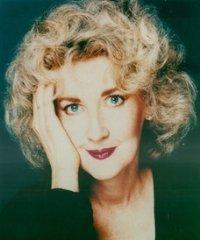
Julia Cameron

Julia Cameron Quotes

Teacher

Filter quotes by topic

Famous Julia Cameron Quotes

“Basic Principles: 1. Creativity is the natural order of life. Life is energy: pure creative energy. 2. There is an underlying, in-dwelling creative force infusing all of life -- including ourselves. 3. When we open ourselves to our creativity, we open ourselves to the creator's creativity within us and our lives. 4. We are, ourselves, creations. And we, in turn, are meant to continue creativity by being creative ourselves. 5. Creativity is God's gift to us. Using our creativity is our gift back to God. 6. The refusal to be creative is self-will and is counter to our true nature. 7. When we open ourselves to exploring our creativity, we open ourselves to God: good orderly direction. 8. As we open our creative channel to the creator, many gentle but powerful changes are to be expected. 9. It is safe to open ourselves up to greater and greater creativity. 10. Our creative dreams and yearnings come from a divine source. As we move toward our dreams, we move toward our divinity.”

“There is no fact, no detail of our life too sordid for God's intervention. God has seen murder. God has seen rape. God has seen drug addiction's and alcoholism's utter degradation. God is available to us no matter what our circumstances. God can find us in a crack house. God can find us crumpled in a doorway or cowering on a park bench. We need only reach out to discover that God reaches back. We are led a step at a time even when we feel we are alone. Sometimes God talks to us through people. Sometimes God reaches us through circumstances or coincidence. God has a million ways to reach out to us, and when we are open to it, we begin to sense the touch of God coming to us from all directions.”

“The "if I had time" lie is a convenient way to ignore the fact that novels require being written and that writing happens a sentence at a time. Sentences can happen in a moment. Enough stolen moments, enough stolen sentences, and a novel is born - without the luxury of time.”

“Wir möchten großzügig, nützlich, von dieser Welt sein. Tatsächlich wollen wir aber einfach nur in Ruhe gelassen werden. Wenn wir andere nicht dazu bringen können, uns in Ruhe zu lassen, dann geben wir uns schließlich selbst auf. Andere mögen meinen, dass wir präsent sind. Wir handeln ja auch Aber unser wahres Selbst ist verschwunden. Übrig ist nur die Hülle unseres eigentlichen Selbst. Sie bleibt zurück, weil sie gefangen ist. Wie ein lustloses Zirkustier, das gepiesackt wird, damit es auftritt, führen wir unsere Kunststücke vor. Wir spulen sie ab. Wir verdienen uns unseren Applaus. Aber die ganze Aufregung geht an uns vorbei. Uns ist es egal Unser innerer Künstler hat sich davongemacht. Unser Leben ist jetzt eine auẞerkörperliche Erfahrung. Wir sind nicht mehr da. Ein Arzt würde unseren Zustand vielleicht als Abspaltung bezeichnen. Ich nenne es sich vom Ort des Verbrechens davonschleichen. Komm heraus, komm heraus, wo immer du auch bist, beschwatzen wir unser wahres Selbst. Doch es hat sich verkrochen. Es vertraut uns nicht mehr. Warum sollte es auch? Wir haben es verraten. ... Durch ihre übertriebene Tugendhaftigkeit haben diese gefangenen Künstler ihr wahres Selbst zerstört, das Selbst, das auch schon in der Kindheit nur wenig Unterstützung erfahren hat. Das Selbst, das immer wieder »Sei nicht so egoistisch!« zu hören bekam. Das wahre Selbst ist ein beunruhigender Zeitgenosse, vital und gelegentlich anarchistisch. ... In der Tugendfalle gefangene Kreative heißen ihr wahres Selbst nicht gut. Sie können es der Welt nicht zeigen, ohne dabei ständig deren Ablehnung zu fürchten.”

“Most of us are not raised to actively encounter our destiny. We may not know that we have one. As children, we are seldom told we have a place in life that is uniquely ours alone. Instead, we are encouraged to believe that our life should somehow fulfill the expectations of others, that we will (or should) find our satisfactions as they have found theirs. Rather than being taugh to ask ourselves who we are, we are schooled to ask others. We are, in effect, trained to listen to others' versions of ourselves. We are brought up in our life as told to us by someone else! When we survey our lives, seeking to fulfill our creativity, we often see we had a dream that went glimmering because we believed, and those around us believed, that the dream was beyond our reach. Many of us would have been, or at least might have been, done, tried something, if... If we had known who we really were.”

“We should write because it is human nature to write. Writing claims our world. It makes it directly and specifically our own. We should write because humans are spiritual beings and writing is a powerful form of prayer and meditation, connecting us both to our own insights and to a higher and deeper level of inner guidance. We should write because writing brings clarity and passion to the act of living. Writing is sensual, experiential, grounding. We should write because writing is good for the soul. We should write because writing yields us a body of work, a felt path through the world we live in. We should write, above all, because we are writers, whether we call ourselves that or not.”

“We imagine that if we had time we would quiet our more shallow selves and listen to a deeper flow of inspiration. Again, this is a myth that lets us off the hook - if I wait for enough time to listen, I don't have to listen now, I don't have to take responsibility for being available to what is trying to bubble up today.”

“Remembering that God is my source, we are in the spiritual position of having an unlimited bank account. Most of us never consider how powerful the creator really is. Instead, we draw limited amounts of the power available to us. We decide how powerful God is for us. We unconsciously set a limit on how much God can give us or help us. We are stingy with ourselves. And if we receive a gift beyond our imagining, we often send it back.”

“An artist requires the upkeep of creative solitude. An artist requires the healing of time alone. Without this period of recharging, our artist becomes depleted. Until we experience the freedom of solitude, we cannot connect authentically. We may be enmeshed, but we are not encountered. Art lies in the moment of encounter. We meet our truth and we meet ourselves and we meet our self-expression.”