Quotessence
Home / Authors / Michael Moorcock Books
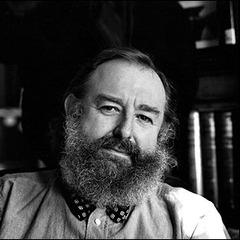
Michael Moorcock

Michael Moorcock Books

Writer

Duke Elric

A source page for quotes linked to Michael Moorcock.
0 quotes

Fabulous Harbors

A source page for quotes linked to Michael Moorcock.

0 quotes

Mother London

A source page for quotes linked to Michael Moorcock.

0 quotes

Stormbringer

A source page for quotes linked to Michael Moorcock.

0 quotes

Related Quotes

“Being an imperfect creature in an imperfect world he would always know paradox. And that was why in paradox there was always a kind of truth. That was why philosophers and soothsayers flourished. In a perfect world there would be no place for them. In an imperfect world the mysteries were always without solution and that was why there was always a great choice of solutions.”

“Therefore it seemed a dreadful injustice that these wise races should perish at the hands of creatures who were still little more than animals. It was as if vultures feasted on and squabbled over the paralyzed body of the youthful poet who could only stare at them with puzzled eyes as they slowly robbed him of an exquisite existence they would never appreciate, never know they were taking.”

“Yet now all the world seemed to be afire. Whole forests burst into flame; whole towns burnt as fiercely as ever Magdeburg had burnt. “Ah,” said Philander Groot, “it could be the End, after all, my friends.” “And good riddance to it,” I said. “It is a poor world, a bad world, a decadent world. It expects love without sacrifice. It expects immediate gratification of its desires, as a child might, as a beast might. And if it does not receive gratification it becomes pettish and destroys in a tantrum. What’s the use of seeking a Cure for its Pain, Philander Groot? What’s the use of attempting, by any means, to divert it from its well-earned doom?” “Because we are alive, I suppose, Captain Von Bek. Because we have no choice but to hope to make it better, through our own designs.” Philander Groot seemed amused by me. “The world is the world,” said Sedenko. “We cannot change it. That is for God to do.” “Perhaps He thinks it is for us to do,” said Groot quietly.”

“The sentiment may perceive and love the universe, but the universe cannot perceive and love the sentiment. The universe sees no distinction between the multitude of creatures and elements which comprise it. All are equal. None is favoured. The universe, equipped with nothing but the materials and the power of creation, continues to create: something of this, something of that. It cannot control what it creates and it cannot, it seems, be controlled by its creations (though a few might deceive themselves otherwise). Those who curse the workings of the universe curse that which is deaf. Those who strike out at those workings fight that which is inviolate. Those who shake their fists, shake their fists at blind stars.”

“We must be bound to one another then," Elric murmured despairingly. "Bound by hell-forged chains and fate-haunted circumstance. Well, then—let it be thus so—and men will have cause to tremble and flee when they hear the names of Elric of Melinbone and Stormbringer, his sword. We are two of a kind—produced by an age which has deserted us. Let us give this age cause to hate us!”

“Introduce your main characters and themes in the first third of your novel. If you are writing a plot-driven genre novel make sure all your major themes/plot elements are introduced in the first third, which you can call the introduction. Develop your themes and characters in your second third, the development. Resolve your themes, mysteries and so on in the final third, the resolution.”

“And now, Elric had told three lies. The first concerned his cousin Yyrkoon. The second concerned the Black Sword. The third concerned Cymoril. And upon those three lies was Elric's destiny to be built, for it is only about things which concern us most profoundly that we lie clearly and with profound conviction.”

“Elric knew that everything that existed had its opposite. In danger he might find peace. And yet, of course, in peace there was danger. Being an imperfect creature in an imperfect world he would always know paradox. And that was why in paradox there was always a kind of truth. That was why philosophers and soothsayers flourished. In a perfect world there would be no place for them. In an imperfect world the mysteries were always without solution and that was why there was always a great choice of solutions.”

“When gods die, self-respect buds', murmured Orland Fank. 'Gods and their examples are not needed by those who respect themselves and, consequently, respect others. Gods are for children, for little, fearful people, for those who would have no responsibility to themselves or their fellows.”

“It remains a mystery to me why some of that [pulp] fiction should be judged inferior to the rafts and rafts of bad social [literary] fiction which continues to be treated by literary editors as if it were somehow superior, or at least worthier of our attention. The careerist literary imperialism of the Bloomsbury years did a lot to produce fiction's present unseemly polarities.”

“Doomed Lord's Passing. For the mind of man alone is free to explore the lofty vastness of the cosmic infinite, to transcend ordinary consciousness, to roam the secret corridors of the brain where past and future melt into one...And universe and individual are linked, the one mirrored in the other, and each contains the other.”