Quotessence
Home / Authors / Northrop Frye
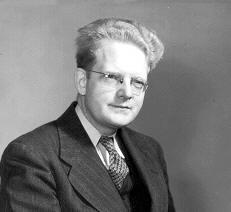
Northrop Frye

Northrop Frye Quotes

Literary critic

Filter quotes by topic

Famous Northrop Frye Quotes

“Some arts move in time, like music; others are presented in space, like painting. In both cases the organizing principle is recurrence, which is called rhythm when it is temporal and pattern when it is spatial. Thus we speak of the rhythm of music and the pattern of painting; but later, to show off our sophistication, we may begin to speak of the rhythm of painting and the pattern of music. In other words, all arts may be conceived both temporally and spatially. The score of a musical composition may be studied all at once; a picture may be seen as the track of an intricate dance of the eye. Literature seems to be intermediate between music and painting: its words form rhythms which approach a musical sequence of sounds at one of its boundaries and form patterns which approach the hieroglyphic or pictorial image atthe other. The attempts to get as near to these boundaries as possible form the main body of what is called experimental writing. We may call the rhythm of literature the narrative, and the pattern, the simultaneous mental grasp of the verbal structure, the meaning or significance. We hear or listen to a narrative, but when we grasp a writer’s total pattern we “see” what he means.”

“The fact that creative powers come from an area of the mind that seems to be independent of the conscious will, and often emerge with a good deal of emotional disturbance in their wake, provides the chief analogy between prophecy and the arts... Some people pursue wholeness and integration, others get smashed up, and fragments are rescued from the smash of an intensity that the wholeness and integration people do not reach.”

“Science begins with the world we have to live in, accepting its data and trying to explain its laws. From there, it moves toward the imagination: it becomes a mental construct, a model of a possible way of interpreting experience. The further it goes in this direction, the more it tends to speak the language of mathematics, which is really one of the languages of the imagination, along with literature and music. Art, on the other hand, begins with the world we construct, not with the world we see. It starts with the imagination, and then works toward ordinary experience.”

“No matter how much experience we may gather in life, we can never in life get the dimension of experience that the imagination gives us. Only the arts and sciences can do that, and of these, only literature gives us the whole sweep and range of human imagination as it sees itself”