Quotessence
Home / Authors / Paul Saffo
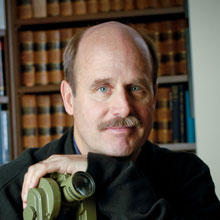
Paul Saffo

Paul Saffo Quotes

Professor

Filter quotes by topic

Famous Paul Saffo Quotes

“I think of futurists as people who have a particular attitude about the future. They're advocates for a certain kind of outcome. As a forecaster I am something very different. I am a professional bystander. I have opinions about the future, of course. But my whole posture is to be detached and to identify what I think will happen and not allow my judgments of what should happen to get involved.”

“Think about reading: Today, parents would love it if their kids read books more because the parents understand the books. Just over 100 years ago, parents were upset because their kids were reading dime-store novels. Parents would say, "I don't want you inside reading anymore. Get outside and play." I guarantee you, in 50 years or so, parents are going to say, "You're not going outside to play until you finish that video game."”

“I think it was Samuel Johnson who said, "There are two kinds of information in this world: that what you know and that what you know where to get." The tools help the latter, and that's what keeps us from going nuts. The sense of overload comes from the gap between that sudden jump in volume (of information) and the tools we have to make sense of it.”

“As a global society we are performing a great experiment on ourselves. Half of the world population wants to race faster into the future. Go visit China and India. They're ready to go. And half of the world wants to drag us into the past. The problem is both sides have guns. I think there really is a reaction. A lot of people are saying enough is enough.”

“As recently as the '70s, people were forced to see information that they didn't agree with in newspapers and the like. Now there is so much information you really can build your own walled garden that just has the stuff that reinforces your view. I think it applies to all of us. People are really going into these separate camps, and that's the big social challenge in this age of too much information. How do we crack that and create a common dialogue?”