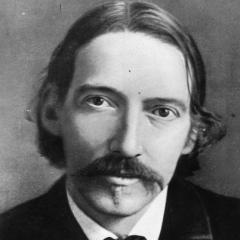
Filter quotes by topic
Famous Robert Louis Stevenson Quotes
Source: The complete short stories
“If you are going to make a book end badly, it must end badly from the beginning.”
Source: The Complete Works of Robert Louis Stevenson: Novels, Short Stories, Poems, Plays, Memoirs, Travel Sketches, Letters and Essays (Illustrated Edition): The Entire Opus of Scottish novelist, poet, essayist and travel writer, containing Treasure Island, Strange Case of Dr Jekyll and Mr Hyde, Kidnapped, Catriona and A Child's Garden of Verses
“Every book is, in an intimate sense, a circular-letter to the friends of him who writes it.”
Source: Collected Memoirs, Travel Sketches and Island Literature of Robert Louis Stevenson: Autobiographical Writings and Essays by the prolific Scottish novelist, poet and travel writer, author of Treasure Island, The Strange Case of Dr. Jekyll and Mr. Hyde, Kidnapped & Catriona
“The difficulty is not to write, but to write what you mean.”
Source: Memories, Portraits, Essays and Records (Annotated Edition)
“I kept always two books in my pocket, one to read, one to write in.”
Source: The Complete Works of Robert Louis Stevenson: Novels, Short Stories, Poems, Plays, Memoirs, Travel Sketches, Letters and Essays (Illustrated Edition): The Entire Opus of Scottish novelist, poet, essayist and travel writer, containing Treasure Island, Strange Case of Dr Jekyll and Mr Hyde, Kidnapped, Catriona and A Child's Garden of Verses
Source: The Collected Letters (Annotated Edition)
Source: The Lantern-Bearers and Other Essays
“Do not write merely to be understood. Write so you cannot possibly be misunderstood.”
Source: Essays in the Art of Writing(illustrated)
“When I say writing, O believe me, it is rewriting that I have chiefly in mind.”