Quotessence
Home / Authors / Robin Wall Kimmerer
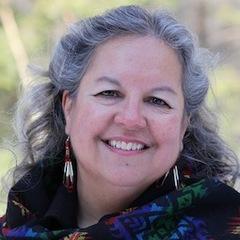
Robin Wall Kimmerer

Robin Wall Kimmerer Quotes

Author

Filter quotes by topic

Famous Robin Wall Kimmerer Quotes

“I choose joy over despair. Not because I have my head in the sand, but because joy is what the earth gives me daily and I must return the gift. We are deluged by information regarding our destruction of the world and hear almost nothing about how to nurture it. It is no surprise then that environmentalism becomes synonymous with dire predictions and powerless feelings. Our natural inclination to do right by the world is stifled, breeding despair when it should be inspiring action. The participatory role of people in the well-being of the land has been lost, our reciprocal relations reduced to a KEEP OUT sign.”

“Despair is paralysis. It robs us of agency. It blinds us to our own power and the power of the earth… Restoration is a powerful antidote to despair. Restoration offers concrete means by which humans can once again enter into positive, creative relationship with the more-than-human world, meeting responsibilities that are simultaneously material and spiritual. ... Restoration is imperative for healing the earth, but reciprocity is imperative for long-lasting, successful restoration. Like other mindful practices, ecological restoration can be viewed as an act of reciprocity in which humans exercise their caregiving responsibility for the ecosystems that sustain them. We restore the land, and the land restores us.”

“Joanna Macy writes that until we can grieve for our planet we cannot love it—grieving is a sign of spiritual health. But it is not enough to weep for our lost landscapes; we have to put our hands in the earth to make ourselves whole again. Even a wounded world is feeding us. Even a wounded world holds us, giving us moments of wonder and joy. I choose joy over despair.”

“What is it that drew us to the hollow tonight? What crazy kind of species is it that leaves a warm home on a rainy night to ferry salamanders across a road? It's tempting to call it altruism, but it's not. There is nothing selfless about it. This night heaps rewards on the givers as well as the recipients. We get to be there, to witness this amazing rite, and, for an evening, to enter into relationship with other beings, as different from ourselves as we can imagine. It has been said that people of the modern world suffer a great sadness, a "species loneliness" - estrangement from the rest of Creation. We have built this isolation with our fear, with our arrogance, and with our homes brightly lit against the night. For a moment as we walked this road, those barriers dissolved and we began to relieve the loneliness and know each other once again.”

“Action on behalf of life transforms. Because the relationship between self and the world is reciprocal, it is not a question of first getting enlightened or saved and then acting. As we work to heal the earth, the earth heals us.”

“In the indigenous view, humans are viewed as somewhat lesser beings in the democracy of species. We are referred to as the younger brother of Creation, so like younger brothers we must learn from our elders. Plants were here first and have had a long time to figure things out. They live both above and below ground and hold the earth in place.”

“In a garden, food arises from partnership. If I don't pick rocks and pull weeds, I'm not fulfilling my end of the bargain. I can do these thing with my handy opposable thumb and capacity to use tools, to shovel manure. But I can no more create a tomato or embroider a trellis in beans than I can turn lead into gold. That is the plants' responsibility and their gift: animating the inanimate. Now there is a gift.”

“I am trying to understand what it means to own a thing, especially a wild and living being. To have exclusive rights to its fate? To dispose of it at will? To deny others it’s use? Ownership seems a uniquely human behavior, a social contract validating the desire for purposeless possession and control. To destroy a wild thing for pride seems a potent act of domination. Wildness cannot be collected and still remain wild. Its nature is lost the moment it is separated from its origins. By the very act of owning, the thing becomes an object, no longer itself.”

“The Honorable Harvest…does not say don’t take, but offers inspiration and a model for what we should take. It’s not so much a list of “do not’s” as a list of “do’s.” Do eat food that is honorably harvested, and celebrate every mouthful. Do use technologies that minimize harm; do take what is given. This philosophy guides not only our taking of food, but also any taking of the gifts of Mother Earth–air, water, and the literal body of the earth: the rocks and soil and fossil fuels.”

“We need acts of restoration, not only for polluted waters and degraded lands, but also for our relationship to the world. We need to restore honor to the way we live, so that when we walk through the world we don't have to avert our eyes with shame, so that we can hold our heads up high and receive the respectful acknowledgement of the rest of the earth's beings.”

“One of our first gifts is the ability to pay attention with all our senses and come to know the world. When we know the beings around us, we can't help but celebrate the gifts they share with us every day. And so our next gift is gratitude. And that thankfulness spills out when we ask ourselves: "What gift could I give, in return for all I've been given?”

“There is an ancient conversation going on between mosses and rocks, poetry to be sure. About light and shadow and the drift of continents. This is what has been called the "dialect of moss on stone - an interface of immensity and minute ness, of past and present, softness and hardness, stillness and vibrancy, yin and yan.”

“We do not pay at the pump for the cost of climate change. For the loss of ecosystem services provided by maples and others. Cheap gas now or maples for the next generation? Call me crazy but I’d welcome the tax that would resolve that question. Individuals far wiser than I have said that we get the government we deserve. That may be true but the maples our most generous of benefactors, most responsible of citizens do not deserve our government: they deserve you and me speaking up on their behalf. To quote our town councilwoman “Show up at the damn meeting” Political action, civil engagement these are powerful acts of reciprocity with the land. The maple nation bill of responsibilities asks us to stand up for the standing people to lead with the wisdom of maples.”