Quotessence
Home / Authors / Rollo May
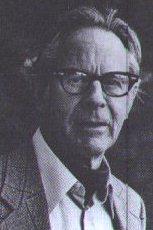
Rollo May

Rollo May Quotes

Psychologist

Filter quotes by topic

Famous Rollo May Quotes

“We in our age are faced with a strange paradox. Never before have we had so much information in bits and pieces flooded upon us by radio and television and satellite, yet never before have we had so little inner certainty about our own being. The more objective truth increases, the more our inner certitude decreases. Our fantastically increased technical power, and each forward step in technology is experienced by many as a new push toward our possible annihilation. Nietzsche was strangely prophetic when he said, “We live in a period of atomic chaos…the terrible apparition…the Nation State…and the hunt for happiness will never be greater than when it must be caught between today and tomorrow; because the day after tomorrow all hunting time may have come to an end altogether.” Sensing this, and despairing of ever finding meaning in life, people these days seize on the many ways of dulling their awareness by apathy, by psychic numbing, or by hedonism. Others, especially young people, elect in alarming and increasing numbers to escape their own being by suicide.”

“The confrontation with death—and the reprieve from it—makes everything look so precious, so sacred, so beautiful that I feel more strongly than ever the impulse to love it, to embrace it, and to let myself be overwhelmed by it. My river has never looked so beautiful. Death, and its ever present possibility makes love, passionate love, more possible. I wonder if we could love passionately, if ecstasy would be possible at all, if we knew we'd never die." — Abraham Maslow”

“What is love? He is neither mortal nor immortal, but a mean between the two. He is a great spirit (daimon) and like all spirits he is intermediate between the divine and the mortal. He is the mediator who spans the chasm which divides men and gods, and therefore in him all is bound together. — Diotima (quoted by Socrates)”

“Eros is the drive for union and reproduction in the biological realm. Even in the birds and animals, we see the "desire of procreation," and they are "in agony when they take the infection of love, which begins with the desire of union." Human beings are changing all the time—hair, flesh, bones, blood, and the whole body are always changing. Which is true not only of the body, but also of the soul, whose habits, tempers, opinions, desires, pleasures, pains, fears, never remain the same. Now in all this change, what binds the diversity together? It is eros, the power in us yearning for wholeness, the drive to give meaning and pattern to our variegation, and integration to counter our disintegrative trends. It is a dimension of experience which is psychological and emotional as well as biological. This is eros.”

“Only when we have seen and foreseen what we dread shall we be rewarded by that dazzling, unforeseen wing-footed wanderer. We could not find him if he were not in some sense of our being, and yet of our being but as water with fire, a noise with silence. He is of all things the most difficult, for that only which comes easily can never be a portion of our being." — W.B. Yeats”

“During the long summers in New Hampshire when this book was being written I would often get up early in the morning and go out on my patio where the valley, stretching off to the mountain ranges in the north and east, was silver with predawn mist. The birds, eloquent voices in an otherwise silent world, had already begun their hallelujah chorus to welcome in the new day. The song sparrow sings with an enthusiasm which rocks him almost off his perch atop the apple tree, and the goldfinch chimes in with his obbligato. The thrush in the woods is so full of song he can't contain himself. The woodpecker beats on the hollow beech tree. The loons over on the lake erupt with their plaintive and tormented daemonic laughter, to save the whole thing from being too sweet. Then the sun comes up over the mountain range revealing an incredibly green New Hampshire overflowing through the whole long valley with a richness that is almost too abundant. The trees seem to have grown several inches overnight, and the meadow is bursting with a million brown-eyed Susans. I feel again the everlasting going and coming, the eternal return, the growing and mating and dying and growing again. And I know that human beings are part of this eternal going and returning, part of its sadness as well as its song. But man, the seeker, is called by his consciousness to transcend the eternal return. I am no different from anyone else except in the choice of areas for the quest. My own conviction has always been to seek the inner reality, with the belief that the fruits of future values will be able to grow only after they are sown by the values of our history. In this transitional twentieth century, when the full results of our bankruptcy of inner values is brought home to us, I believe it is especially important that we seek the source of love and will.”

“In such an age of radical transition, the individual is driven back into his own consciousness. When the foundations of love and will have been shaken and all but destroyed, we cannot escape the necessity of pushing below the surface and searching within our own consciousness and within the 'collective unarticulated consciousness' of our society for the sources of love and will. I use the term 'source' as the French speak of the 'source' of a river—the springs from which the water originally comes. If we can find the sources from which love and will spring, we may be able to discover the new forms which these essential experiences need in order to become viable in the new age into which we are moving. In this sense, our quest, like every such exploration, is a moral quest, for we are seeking the bases on which a morality for a new age can be founded. Every sensitive person finds himself in Stephen Dedalus' position: 'I go forth... to forge in the smithy of my soul the uncreated conscience of my race.”