Quotessence
Home / Authors / S. I. Hayakawa
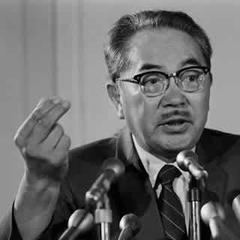
S. I. Hayakawa

S. I. Hayakawa Quotes

Former United States Senator

Filter quotes by topic

Famous S. I. Hayakawa Quotes

“People who think of themselves as tough-minded and realistic, among them influential political leaders and businessmen as well as go-getters and hustlers of smaller caliber, tend to take it for granted that human nature is selfish and that life is a struggle in which only the fittest may survive. According to this philosophy, the basic law by which man must live, in spite of his surface veneer of civilization, is the law of the jungle. The "fittest" are those who can bring to the struggle superior force, superior cunning, and superior ruthlessness.”

“In the case of drama (stage, movies, television ), there appear to be people in almost every audience who never quite fully realize that a play is a set of fictional, symbolic representations. An actor is one who symbolizes other people, real or imagined. [...] Also some years ago it was reported that when Edward G. Robinson, who used to play gangster roles with extraordinary vividness, visited Chicago, local hoodlums would telephone him at his hotel to pay their professional respects.”

“Animals struggle with each other for food or for leadership, but they do not, like human beings, struggle with each other for thatthat stands for food or leadership: such things as our paper symbols of wealth (money, bonds, titles), badges of rank to wear on our clothes, or low-number license plates, supposed by some people to stand for social precedence. For animals the relationship in which one thing stands for something else does not appear to exist except in very rudimentary form.”

“Few people...have had much training in listening. The training of most oververbalized professional intellectuals is in the opposite direction. Living in a competitive culture, most of us are most of the time chiefly concerned with getting our own views across, and we tend to find other people's speeches a tedious interruption of the flow of our own ideas.”