Quotessence
Home / Authors / Steven Weinberg
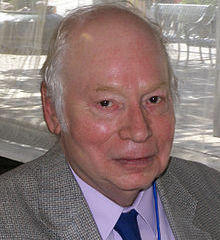
Steven Weinberg

Steven Weinberg Quotes

Theoretical Physicist

Filter quotes by topic

Famous Steven Weinberg Quotes

“There are those whose views about religion are not very different from my own, but who nevertheless feel that we should try to damp down the conflict, that we should compromise it. … I respect their views and I understand their motives, and I don't condemn them, but I'm not having it. To me, the conflict between science and religion is more important than these issues of science education or even environmentalism. I think the world needs to wake up from its long nightmare of religious belief; and anything that we scientists can do to weaken the hold of religion should be done, and may in fact be our greatest contribution to civilization.”

“The invisible and the non-existent look very much alike.”

“If there is no solace in the fruits of our research, there is at least some consolation in the research itself. Men and women are not content to comfort themselves with tales of gods and giants, or to confine their thoughts to the daily affairs of life; they also build telescopes and satellites and accelerators and sit at their desks for endless hours working out the meaning of the data they gather.”

“We have simply arrived too late in the history of the universe to see this primordial simplicity easily... But although the symmetries are hidden from us, we can sense that they are latent in nature, governing everything about us. That's the most exciting idea I know: that nature is much simpler than it looks. Nothing makes me more hopeful that our generation of human beings may actually hold the key to the universe in our hands - that perhaps in our lifetimes we may be able to tell why all of what we see in this immense universe of galaxies and particles is logically inevitable.”

“How strange it would be if the final theory were to be discovered in our lifetimes! The discovery of the final laws of nature will mark a discontinuity in human intellectual history, the sharpest that has occurred since the beginning of modern science in the seventeenth century. Can we now imagine what that would be like?”

“How then did we come to the "standard model"? And how has it supplanted other theories, like the steady state model? It is a tribute to the essential objectivity of modern astrophysics that this consensus has been brought about, not by shifts in philosophical preference or by the influence of astrophysical mandarins, but by the pressure of empirical data.”