Quotessence
Home / Authors / Thomas de Quincey Books
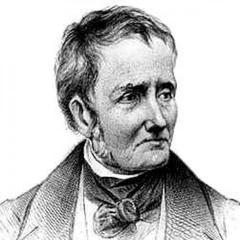
Thomas de Quincey

Thomas de Quincey Books

Essayist

Related Quotes

“The silence was more profound than that of midnight: and to me the silence of a summer morning is more touching than all other silence, because, the light being broad and strong, as that of noon-day at other seasons of the year, it seems to differ from perfect day, chiefly because man is not yet abroad: and thus, the peace of nature, and of the innocent creatures of God, seems to be secure and deep, only so long as the presence of man, and his restless and unquiet spirit, are not there to trouble its sanctity.”

“In fact, every intricate and untried path in life, where it was from the first a matter of arbitrary choice to enter upon it or avoid it, is effectually a path through a vast Hercynian forest, unexplored and unmapped, where each several turn in your advance leaves you open to new anticipations of that is next to be expected, and consequently open to altered valuations of all that has been already traversed. Even the character of your own absolute experience, past and gone, which (if any thing in this world) you might surely answer for as sealed and settled for ever - even this you must submit to hold in suspense, as a thing conditional and contingent upon what is yet come - liable to have its provisional character affirmed or reversed, according to the new combinations into which it may enter with elements only yet perhaps in the earliest stages of development.”

“In fact, every intricate and untried path in life, where it was from the first a matter of arbitrary choice to enter upon it or avoid it, is effectually a path through a vast Hercynian forest, unexplored and unmapped, where each several turn in your advance leaves you open to new anticipations of that is next to be expected, and consequently open to altered valuations of all that has been already traversed. Even the the character of your own absolute experience, past and gone, which (if any thing in this world) you might surely answer for as sealed and settled for ever - even this you must submit to hold in suspense, as a thing conditional and contingent upon what is yet come - liable to have its provisional character affirmed or reversed, according to the new combinations into which it may enter with elements only yet perhaps in the earliest stages of development.”

“Guilt and misery shrink, by a natural instinct, from public notice: they court privacy and solitude: and even in their choice of a grave will sometimes sequester themselves from the general population of the churchyard, as if declining to claim fellowship with the great family of man; thus, in a symbolic language universally understood, seeking (in the affecting language of Mr. Wordsworth) ’ Humbly to express A penitential loneliness.”

“how easily a man who has never been in any great distress, may pass through life without knowing, in his own person at least, anything of the possible goodness of the human heart - or, as I must add with a sigh, of its possible vileness. So a thick curtain of manners is drawn over the features and expression of men's natures, that to the ordinary observer, the two extremities, and the infinite field of varieties which lie between them, are all confounded - the vast and multitudinous line of differences expressed in the gamut or alphabet of elementary sounds.”

“For my own part, without breach of truth or modesty, I may affirm, that my life has been, on the whole, the life of a philosopher: from my birth I was made an intellectual creature: and intellectual in the highest sense my pursuits and pleasures have been, even from my school-boy days. If opium-eating be a sensual pleasure, and if I am bound to confess that I have indulged in it to an excess, not yet recorded of any other man, it is no less true, that I have struggled against this fascinating enthralment with a religious zeal, and have, at length, accomplished what I never yet heard attributed to any other man - have untwisted, almost to its final links, the accursed chain which fettered me. Such a self-conquest may reasonably be set off in counterbalance to any kind of degree of self-indulgence.”

“On this account I feel always, on a Saturday night, as though I also were released from some yoke of labour, had some wages to receive, and some luxury of repose to enjoy. For the sake, therefore, of witnessing, upon as large a scale as possible, a spectacle with which my sympathy was so entire, I used after, on Saturday nights, after I had taken opium, to wander forth, without much regarding the direction or the sistance, to all the markets, and other parts of London, to which the poor resort on a Saturday night, for laying out their wages. Many a family party, consisting of a man, his wife, and sometimes one or two of his children, have I listened to, as they stood consulting on their ways and means, or the strength of their exchequer, or the price of household articles. Gradually I became familiar with their wishes, their difficulties, and their opinions. Sometimes there might be heard murmers of discontent: but far oftener expressions on the countenance, or uttered in words, of patience, hope, and tranquillity. And taken generally, I must say, that, in this point at least, the poor are far more philosophic than the rich - that they show a more ready and cheerful submission to what they consider as irremediable evils, or irreparable losses. Whenever I saw occasion, or could do it without appearing to be intrusive, I joined their parties; and gave my opinion upon the matter in discussion, which, if not always judicious, was always received indulgently. If wages were a little higher, or expected to be so, or the quartern loaf a little lower, or it was reported that onions and butter were expected to fall, I was glad: yet, if the contrary were true, I drew from opium some means of consoling myself. For opium (like the bee, that extracts its materials indiscriminately from roses and from the soot of chimneys) can overrule all feelings into a compliance with the master key. Some of these rambles lead me to great distances: for an opium-eater is too happy to observe the motion of time.”

“perhaps he thought the subject of too delicate a nature to be made common: and as many people might then indiscriminately use it, it would take from that necessary fear and caution, which should prevent their experiencing the extensive power of this drug: for there are many properties in itm if universally known, that would habituate the use, and make it more in request with us than the Turks themselves: the result of which my knowledge,' he adds, 'must prove a general misfortune.' In the necessity of this conclusion I do not altogether concur”

“I assured her that she would meet with immediate attention; and that English justice, which was no respecter of persons, would speedily and amply avenge her on the brutal ruffian who had plundered her little property. She promised me that she would; but she delayed taking steps the steps I pointed out from time to time: for she was timid and dejected to a degree which showed how deeply sorrow had taken hold of her young heart: and perhaps she thought justly that the most upright judge, and the most righteous tribunals, could do nothing to repair her heaviest wrongs.”

“If she lived, doubtless we must have been sometimes in search of each other, at the very same moment, through the mighty labyrinths of London; perhaps, even within a few feet of each other - a barrier no wider in a London street, often amounting in the end to a separation for eternity!”

“it is sufficient to say, that a chorus of work, the whole of my past life - but, as if recalled by an act of memory, but as if present and incarnated in the music: no longer painful to dwell upon: but the detail of it's incidents removed, or blended in some hazy abstraction; and its passions exalted, spiritualized, and sublimed. All this was to be had for five shillings.”

“I was, indeed, greatly irritated at the bishop's having suggested any grounds of suspicion, however remotely, against a person whom he had never seen: and I thought of letting him know my mind in Greek: which, at the same time that it would furnish some presumption that I was no swindler, would also (I hoped) compel the bishop to reply in the same language; in which case, I doubted not to make it appear, that if I was not so rich as his lordship, I was a far better Grecian.”

“It must then have been nearly midnight: but so slowly did I creep along, that I heard a clock in a cottage strike four before I turned down the lane from Slough to Eton.”

“For the last year and a half this room had been my 'pensive citadel:' here I had read and studied through all the hours of the night: and, though true it was, that for the latter part of this time I, who was framed for love and gentle affections, had lost my gaiety and happiness, during the strife and fever of contention with my guardian; yet, on the other hand, as a boy, so passionately fond of books, and dedicated to intellectual pursuits, I could not fail to have enjoyed many happy hours in the midst of general dejection. I wept as I looked round on the chair, hearth, writing-table, and other familiar objects, knowing too certainly, that I looked upon them for the last time.”

“During some years, I hoped that she did live; and I suppose that, in the literal and unrhetorical use of the word, myriad, I may say that on my different visits to London, I have looked into many, many myriads of female faces, in the hope of meeting her. I should know her again amongst a thousand, if I saw her for a moment; for, though not handsome, she had a sweet expression of countenance, and a peculiar and graceful carriage of the head. - I sought her, I have said, in hope. So it was for years; but now I should fear to see her; and her cough, which grieved me when I parted with her, is now my consolation. I now wish to see her no longer; but think of her, more gladly, as one long since laid in the grave; in the grave, I would hope, of a Magdalen; taken away, before injuries and cruelty had blotted out and transfigured her ingenuous nature, or the brutalities of ruffians had completed the ruin they had begun.”

“The town of L— represented the earth, with its sorrows and its graves left behind, yet not out of sight, nor wholly forgotten. The ocean, in everlasting but gentle agitation, and brooded over by a dove-like calm, might not unfitly typify the mind and the mood which then swayed it. For it seemed to me as if then first I stood at a distance, and aloof from the uproar of life; as if the tumult, the fever, and the strife, were suspended; a respite granted from the secret burthens of the heart; a sabbath of repose; a resting from human labours. Here were the hopes which blossom in the paths of life, reconciled with the peace which is in the grave; motions of the intellect as unwearied as the heavens, yet for all anxieties a halcyon calm: a tranquility that seemed no product of inertia, but as if resulting from mighty and equal antagonisms; infinite activities, infinite repose.”

“In order that a new world may step in, this world must for a time disappear. The murderers and the murder must be insulated -- cut off by an immeasurable gulf from the ordinary tide and succession of human affairs locked up and sequestered in some deep recess; we must be made sensible that the world of ordinary life is suddenly arrested -- laid asleep -- tranced -- racked into a dread armistice; time must be annihilated; relation to things without abolished; and all must pass self-withdrawn into a deep syncope and suspension of earthly passion. Hence it is, that, when the deed is done, when the work of darkness is perfect, then the world of darkness passes away like a pageantry in the clouds: the knocking at the gate is heard; and it makes known audibly that the reaction has commenced: the human has made its reflux upon the fiendish; the pulses of life are beginning to beat again...”

“I, having my previous impressions of awe deepened by these solemn trophies of chance and change amongst mighty nations, had suddenly been surprised by a dream, as profound as at present, in which a thought that often had persecuted me figured triumphantly. This thought turned upon the fatality that must often attend an evil choice. As an oracle of fear I remembered that great Roman warning, Nessit vox missa reverti (that a word once uttered is irrevocable), a freezing arrest upon the motions of hope too sanguine that haunted me in many shapes. Long before that fifteenth year of mine, I had noticed, as a worm lying at the heart of life and fleeting its security, the fact that innumerable acts of choice change countenance and are variously appraised at varying stage of life - shift with the shifting hours. Already at fifteen, I had become deeply ashamed of judgements which I had once pronounced, of idle hopes that I had once encouraged, false admirations or contempts with which once I had sympathized. And, as to the acts which I surveyed with any doubts at all, i never felt sure that after some succession of years I might not feel withering doubts about them, both as to principle and as to inevitable results.”

“The respectable London druggists, in widely remote quarters of London, from whom I happened lately to be purchasing small quantities of opium, assured me, that the number of amateur opium-eaters (as I may term them) was, at this time, immense; and that the difficulty of distinguishing these persons, to whom habit had rendered opium necessary, from such as were purchasing it with a view to suicide, occasioned them daily trouble and disputes.”

“There is first the literature of knowledge, and secondly, the literature of power. The function of the first is--to teach; the function of the second is--to move, the first is a rudder, the second an oar or a sail. The first speaks to the mere discursive understanding; the second speaks ultimately, it may happen, to the higher understanding or reason, but always through affections of pleasure and sympathy.”

“A great scholar, in the highest sense of the term, is not one who depends simply on an infinite memory, but also on an infinite and electrical power of combination; bringing together from the four winds, like the Angel of the Resurrection, what else were dust from dead men's bones, into the unity of breathing life.”

“Many a man has risen to eminence under the powerful reaction of his mind in fierce counter-agency to the scorn of the unworthy, daily evoked by his personal defects, who with a handsome person would have sunk into the luxury of a careless life under the tranquillizing smiles of continual admiration.”

“It is an impressive truth that sometimes in the very lowest forms of duty, less than which would rank a man as a villain, there is, nevertheless the sublimest ascent of self-sacrifice. To do less would class you as an object of eternal scorn, to do so much presumes the grandeur of heroism.”

“Grief! thou art classed amongst the depressing passions. And true it is that thou humblest to the dust, but also thou exaltest to the clouds. Thou shakest us with ague, but also thou steadiest like frost. Thou sickenest the heart, but also thou healest its infirmities.”