Quotessence
Home / Authors / Tracy K. Smith
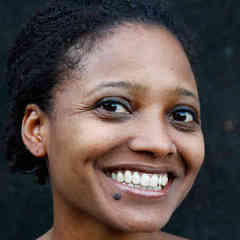
Tracy K. Smith

Tracy K. Smith Quotes

Poet

Filter quotes by topic

Famous Tracy K. Smith Quotes

“Will we make it safely through this upheaval? Will things go back to normal? I don’t know. I hope so. I hope the prognosis for all of us is good. But for now, I’m keeping my head down and doing what is required. I’m mothering my children. I’m doing my part to hold our home together. I’m reassuring the people I love, and letting them reassure me. It’s remarkable how strong we’ve all become.”

“I didn't want to wait on my knees In a room made quiet by waiting. A room where we'd listen for the rise Of breath, the burble in his throat. I didn't want the orchids or the trays Of food meant to fortify that silence, Or to pray for him to stay or to go then Finally toward that ecstatic light. I didn't want to believe What we believe in those rooms: That we are blessed, letting go, Letting someone, anyone, Drag open the drapes and heave us Back into our blinding, bright lives.”

“So why do we insist He has vanished, that death ran off with our Everything worth having? Why not that he was Swimming only through this life--his slow, Graceful crawl, shoulders rippling, Legs slicing away at the waves, gliding Further into what life itself denies? He is only gone so far as we can tell. Though When I try, I see the white cloud of his hair In the distance like an eternity.”

“Do you ever stop and think how lucky you are to have failed at certain things? Not to have gotten the job that would have sent you further down the path you later realized was wrong. Not to have convinced that old flame to patch things up and make them work. Not to have won, when losing is what instilled in you the humility to see where you were coming up short, and the determination to grow into a better version of the person you are.”

“There is a We in this poem To which everyone belongs. As in We the People-- In order to form a more perfect Union-- And: We were objects of much curiosity To the Indians-- And: The next we present before you Are things very appalling-- And: We find we are living, suffering, loving, Dying a story. We had not known otherwise-- We's a huckster, trickster, has pluck. We will draw you in.”

“In America’s earliest mythologizing of itself, America is the underdog guided to the promised land by a merciful God. Other countries do something similar. In some other national mythology, America might be the Egyptian Pharaoh holding a worthy population captive. We can’t all be that righteous. And sometimes that’s hard to stomach. It’s hard accepting that your comfort, or privilege, or disinterest might feed into a real and palpable problem for another group of people. And it’s hard, once you’ve recognized this to be the case, to heed the call to change.”

“Joy is a part of my process. In fact, I'd go so far as to say that poetry, as a practice, necessitates a sense of joy. It's exhilarating to come into contact with the things we write into being. And a real sense of play and abandon – even when we are relying on hard-won technique, and even when the aim is deadly serious. How often do we get the excuse to stop, think, and then stop thinking altogether and try to listen to what sits behind our outside of our thoughts? Poets are lucky.”

“Once I started writing all the time and interacting with poets, I made a conscious decision to identify myself as a poet. It's funny how much a single word can provide focus and direction. As soon as I claimed that identity, I started clearing more and more space for poetry in my life and applying poetic tools to other areas of my life. The world became a different place, and I witnessed it through different kinds of eyes.”

“I know that in a poem, even when the speaker is speaking from the poet's experience, there's always something that's borrowed, some authority that sits outside of the poet that the poem has claimed. There's a dramatic pitch that makes the speaker capable of saying something more courageous or stranger or simply other than what the poet would be able to say.”

“I feel like the older I get, the truer it feels that I'm only going have an investment in a poem if it allows or forces me to bring something that's supremely me onto the page. I used to think that the speaker of a poem was talking to someone else, to some ideal reader or listener, but now I think that speakers - poets - are talking to themselves. The poem allows you to pose questions that you have you ask of yourself knowing that they are unanswerable.”

“Poems infatuated with their own smarts and detached from any emotional grounding can leave the reader feeling lonely, empty and ashamed for having expected more. Like icy adolescents, such poetry is more interested in commiserating than acknowledging that feelings — the sentiments that make us susceptible to sentimentality — actually exist.”