Quotessence
Home / Authors / Virginia Woolf Books
Virginia Woolf

Virginia Woolf Books

Writer

Three Guineas

A source page for quotes linked to Virginia Woolf.
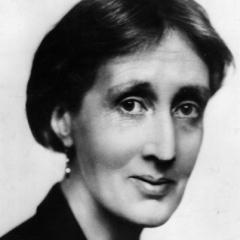
0 quotes

1920-1924

A source page for quotes linked to Virginia Woolf.

0 quotes

A Summing Up

A source page for quotes linked to Virginia Woolf.

0 quotes

Flush

A source page for quotes linked to Virginia Woolf.

0 quotes

Kew Gardens

A source page for quotes linked to Virginia Woolf.

0 quotes

Las Olas

A source page for quotes linked to Virginia Woolf.

0 quotes

Paper Darts

A source page for quotes linked to Virginia Woolf.

0 quotes

The Pargiters

A source page for quotes linked to Virginia Woolf.

0 quotes

Related Quotes

“Something now leaves me; something goes from me to meet that figure who is coming, and assures me that I know him before I see who it is. How curiously one is changed by the addition, even at a distance, of a friend. How useful an office one's friends perform when they recall us. Yet how painful to be recalled, to be mitigated, to have one's self adulterated, mixed up, become part of another. As he approaches I become not myself but Neville mixed with somebody - with whom? - with Bernard? Yes, it is Bernard, and it is to Bernard that I shall put the question, Who am I?”

“Only for a moment; but it was enough. It was a sudden revelation, a tinge like a blush when one tried to check and then, as it spread, one yielded to its expansion, and rushed to the farthest verge and there quivered and felt the world come closer, swollen with some astonishing significance, some pressure of rapture, which split its thin skin and gushed and poured with an extraordinary alleviation over the cracks and sores! Then, for that moment, she had seen an illumination; a match burning in a crocus; an inner meaning almost expressed. But the close withdrew; the hard softened. It was over — the moment.”

“To want and not to have, sent all up her body a hardness, a hollowness, a strain. And then to want and not to have--to want and want--how that wrung the heart, and wrung it again and again! Oh, Mrs. Ramsay! she called out silently, and to that essence which sat by the boat, that abstract one made of her, that woman in grey, as if to abuse her for having gone, and then having gone, come back again. It had seemed so safe, thinking of her. Ghost, air, nothingness, a thing you could play with easily and safely at any time of day or night, she had been that, and then suddenly she put her hand out and wrung the heart thus.”

“It rasped her, though, to have stirring about her this brutal monster! to hear twigs cracking and feel hooves planted down in the depths of that leaf-encumbered forest, the soul; never to be content quite, or quite secure, for at any moment the brute would be stirring, this hatred, which, especially since her illness had power to make her feel scraped, hurt in her spine; gave her physical pain, and made all pleasure in beauty, in friendship, in being well, in being loved and making her home a delightful rock, quiver, and bend as if indeed there were a monster grubbing at the roots, as if the whole panoply of content were nothing but self love! this hatred!”

“Why--?" he jerked his thumb in the direction of the young, "when they're so lovely--" She too looked at the girl, who was fastening a flower that had come undone in the front of her frock. She smiled. She said nothing. Then half consciously she echoed his question without a meaning in her echo, "Why?" He was dashed for a moment. It seemed to him that she refused to help him. And he wanted her to help him. Why should she not take the weight off his shoulders and give him what he longed for --assurance, certainty? Because she too was deformed like the rest of them? He looked down at her hands. They were strong hands; fine hands; but if it were a question, he thought, watching the fingers curl slightly, of "my" children, of "my" possession, it would be one rip down the belly; or teeth in the soft fur of the throat. We cannot help each other, he thought, we are all deformed. Yet, disagreeable as it was to him to remove her from the eminence upon which he placed her, perhaps she was right, he thought, and we who make idols of other people, who endow this man, that woman, with power to lead us, only add to the deformity, and stoop ourselves.”

“Fear no more," said Clarissa. Fear no more the heat o' the sun; for the shock of Lady Bruton asking Richard to lunch without her made the moment in which she had stood shiver, as a plant on the river-bed feels the shock of a passing oar and shivers: so she rocked: so she shivered. Millicent Bruton, whose lunch parties were said to be extraordinarily amusing, had not asked her. No vulgar jealousy could separate her from Richard. But she feared time itself, and read on Lady Bruton's face, as if it had been a dial cut in impassive stone, the dwindling of life; how year by year her share was sliced; how little the margin that remained was capable any longer of stretching, of absorbing, as in the youthful years, the colours, salts, tones of existence, so that she filled the room she entered, and felt often as she stood hesitating one moment on the threshold of her drawing-room, an exquisite suspense, such as might stay a diver before plunging while the sea darkens and brightens beneath him, and the waves which threaten to break, but only gently split their surface, roll and conceal and encrust as they just turn over the weeds with pearl.”

“Fame', he (Orlando) said, 'is like .. a braided coat which hampers the limbs; a jacket of silver which curbs the heart; a painted shield which covers a scarecrow,' etc. etc. .. While fame impedes and constricts, obscurity wraps about a man like a mist; obscurity is dark, ample and free; obscurity lets the mind take its way unimpeded. Over the obscure man is poured the merciful suffusion of darkness. None knows where he goes or comes. He may seek the truth and speak it; he alone is free; he alone is truthful; he alone is at peace. .. Sunk for a long time in profound thoughts as to the value of obscurity, and the delight of having no name, but being like a wave which returns to the deep body of the sea; thinking how obscurity rids the mind of the irk of envy and spite; how it sets running in the veins the free waters of generosity and magnanimity; and allows giving and taking without thanks offered or praise given; which must have been the way of all great poets, he supposed, .. for, he thought, Shakespeare must have written like that, and the church builders built like that, anonymously, needing no thanking or naming, but only their work in the daytime and a little ale perhaps at night - 'What an admirable life this is,' he thought, stretching his limbs out under the oak tree. 'And why not enjoy it this very moment?”

“An offering for the sake of offering, perhaps. Anyhow, it was her gift. Nothing else had she of the slightest importance; could not think, write, even play the piano. She muddled Armenians and Turks; loved success; hated discomfort; must be liked; talked oceans of nonsense: and to this day, ask her what the Equator was, and she did not know. All the same, that one day should follow another; Wednesday, Thursday, Friday, Saturday; that one should wake up in the morning; see the sky; walk in the park; meet Hugh Whitbread; then suddenly in came Peter; then these roses; it was enough. After that, how unbelievable death was!-that it must end; and no one in the whole world would know how she had loved it all; how, every instant . . .”

“And since a novel has this correspondence to real life, its values are to some extent those of real life. But it is obvious that the values of women differ very often from the values which have been made by the other sex; naturally this is so. Yet is it the masculine values that prevail. Speaking crudely, football and sport are "important"; the worship of fashion, the buying of clothes "trivial." And these values are inevitably transferred from life to fiction. This is an important book, the critic assumes, because it deals with war. This is an insignificant book because it deals with the feelings of women in a drawing-room.”

“Was it wisdom? Was it knowledge? Was it, once more, the deceptiveness of beauty, so that all one’s perceptions, half-way to truth, were tangled in a golden mesh? Or did she lock up within her some secret which certainly Lily Briscoe believed people must have for the world to go on at all? Every one could not be as helter skelter, hand to mouth as she was. But if they knew, could they tell one what they knew? Sitting on the floor with her arms round Mrs. Ramsay’s knees, close as she could get, smiling to think that Mrs. Ramsay would never know the reason of that pressure, she imagined how in the chambers of the mind and heart of the woman who was, physically, touching her, were stood, like the treasures in the tombs of kings, tablets bearing sacred inscriptions, which if one could spell them out, would teach one everything, but they would never be offered openly, never made public. What art was there, known to love or cunning, by which one pressed through into those secret chambers? What device for becoming, like waters poured into one jar, inextricably the same, one with the object one adored? Could the body achieve, or the mind, subtly mingling in the intricate passages of the brain? or the heart? Could loving, as people called it, make her and Mrs. Ramsay one? for it was not knowledge but unity that she desired, not inscriptions on tablets, nothing that could be written in any language known to men, but intimacy itself, which is knowledge, she had thought, leaning her head on Mrs. Ramsay’s knee.”

“Shakespeare's sister as I had made it, is that any woman born with a great gift in the sixteenth century would certainly have gone crazed, shot herself, or ended her days in some lonely cottage outside the village, half witch, half wizard, feared and mocked at. For it needs little skill in psychology to be sure that a highly gifted girl who had tried to use her gift for poetry would have been so thwarted and hindered by other people, so tortured and pulled asunder by her own contrary instincts, that she must have lost her health and sanity to a certainty.”

“How, then, she had asked herself, did one know one thing or another thing about people, sealed as they were? Only like a bee, drawn by some sweetness or sharpness in the air intangible to touch or taste, one haunted the dome-shaped hive, ranged the wastes of the air over the countries of the world alone, and then haunted the hives with their murmurs and their stirrings; the hives which were people.”

“[…] if people are highly successful in their professions, they lose their senses. Sight goes. They have no time to look at pictures. Sound goes. They have no time to listen to music. Speech goes. They have no time for conversation. They lose their sense of proportion – the relations between one thing and another. Humanity goes. Money making becomes so important that they must work by night as well as by day. Health goes. And so competitive do they become that they will not share their work with others though they have more than they can do themselves. What then remains of a human being who has lost sight, and sound, and sense of proportion? Only a cripple in a cave.”

“For now she need not think of anybody. She could be herself, by herself. And that was what now she often felt the need of - to think; well not even to think. To be silent; to be alone. All the being and the doing, expansive, glittering, vocal, evaporated; and one shrunk, with a sense of solemnity, to being oneself, a wedge-shaped core of darkness, something invisible to others... and this self having shed its attachments was free for the strangest adventures.”

“It seemed now as if, touched by human penitence and all its toil, divine goodness had parted the curtain and displayed behind it, single, distinct, the hare erect; the wave falling; the boat rocking, which did we deserve them, should be ours always. But alas, divine goodness, twitching the cord, draws the curtain; it does not please him; he covers his treasures in a drench of hail, and so breaks them, so confuses them that it seems impossible that their calm should ever return or that we should ever compose from their fragments a perfect whole or read in the littered pieces the clear words of truth. For our penitence deserves a glimpse only; our toil respite only.”