Quotessence
Home / Authors / W. Somerset Maugham
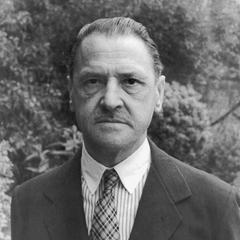
W. Somerset Maugham

W. Somerset Maugham Quotes

Playwright

Filter quotes by topic

Famous W. Somerset Maugham Quotes

“Most of these stories are on the tragic side. But the reader must not suppose that the incidents I have narrated were of common occurrence. The vast majority of these people, government servants, planters, and traders, who spent their working lives in Malaya were ordinary people ordinarily satisfied with their station in life. They did the jobs they were paid to do more or less competently,. They were as happy with their wives as are most married couples. They led humdrum lives and did very much the same things every day. Sometimes by way of a change they got a little shooting; but at a rule, after they had done their day's work, they played tennis if there were people to play with, went to the club at sundown if there was a club in the vicinity, drank in moderation, and played bridge. They had their little tiffs, their little jealousies, their little flirtations, their little celebrations. They were good, decent, normal people. I respect, and even admire, such people, but they are not the sort of people I can write stories about. I write stories about people who have some singularity of character which suggests to me that they may be capable of behaving in such a way as to give me an idea that I can make use of, or about people who by some accident or another, accident of temperament, accident of environment, have been involved in unusual contingencies. But, I repeat, they are the exception.”

“And if I am not mistaken here is the secret of the greatness that was Spain. In Spain it is men that are the poems, the pictures and the buildings. Men are its philosophies. They lived, these Spaniards of the Golden Age; they felt and did; they did not think. Life was what they sought and found, life in its turmoil, its fervour and its variety. Passion was the seed that brought them forth and passion was the flower they bore. But passion alone cannot give rise to a great art. In the arts the Spaniards invented nothing. They did little in any of those they practised, but give a local colour to a virtuosity they borrowed from abroad. Their literature, as I have ventured to remark, was not of the highest rank; they were taught to paint by foreign masters, but, inapt pupils, gave birth to one painter only of the very first class; they owed their architecture to the Moors, the French and the Italians, and the works themselves produced were best when they departed least from their patterns. Their preeminence was great, but it lay in another direction: it was a preeminence of character. In this I think they have been surpassed by none and equalled only by the ancient Romans. It looks as though all the energy, all the originality, of this vigorous race had been disposed to one end and one end only, the creation of man. It is not in art that they excelled, they excelled in what is greater than art--in man. But it is thought that has the last word.”

“To bear failure with courage is the best proof of character that anyone can give... You will find that people forget the failures of others very quickly.... My last piece of advice is not to let anyone see your mortification, but whatever you fancy people are saying about you to go on with your ordinary life as though nothing unpleasant had happened to you.”

“People do tell a writer things that they don't tell others. I don't know why, unless it is that having read one or two of his books they feel on peculiarly intimate terms with him; or it may be that they dramatize themselves and, seeing themselves as it were as characters in a novel, are ready to be as open with him as they imagine the characters of his invention are.”

“But there are people who take salt with their coffee. They say it gives a tang, a savour, which is peculiar and fascinating. In the same way there are certain places, surrounded by a halo of romance, to which the inevitable disillusionment you experience on seeing them gives a singular spice. You had expected something wholly beautiful and you get an impression which is infinitely more complicated than any that beauty can give you. It is the weakness in the character of a great man which may make him less admirable but certainly more interesting. Nothing had prepared me for Honolulu.”

“No one can write a best seller by trying to. He must write with complete sincerity; the clichés that make you laugh, the hackneyed characters, the well-worn situations, the commonplace story that excites your derision, seem neither hackneyed, well worn nor commonplace to him. ... The conclusion is obvious: you cannot write anything that will convince unless you are yourself convinced. The best seller sells because he writes with his heart's blood.”

“He is not famous. It may be that he never will be. It may be that when his life at last comes to an end he will leave no more trace of his sojourn on earth than a stone thrown into a river leaves on the surface of the water. But it may be that the way of life that he has chosen for himself and the peculiar strength and sweetness of his character may have an ever-growing influence over his fellow men so that, long after his death perhaps, it may be realized that there lived in this age a very remarkable creature.”