Quotessence
Home / Authors / W. Somerset Maugham
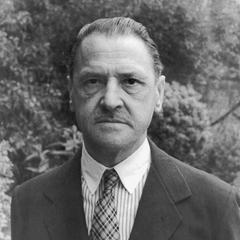
W. Somerset Maugham

W. Somerset Maugham Quotes

Playwright

Filter quotes by topic

Famous W. Somerset Maugham Quotes

“I hate you. I wish you was dead." Mrs. Carey gasped. He said the words so savagely that it gave her quite a start. She had nothing to say. She sat down in her husband's chair; and as she thought of her desire to love the friendless, crippled boy and her eager wish that he should love her--she was a barren woman and, even though it was clearly God's will that she should be childless, she could scarcely bear to look at little children sometimes, her heart ached so--the tears rose to her eyes and one by one, slowly, rolled down her cheeks. Philip watched her in amazement. She took out her handkerchief, and now she cried without restraint. Suddenly Philip realised that she was crying because of what he had said, and he was sorry. He went up to her silently and kissed her. It was the first kiss he had ever given her without being asked. And the poor lady, so small in her black satin, shrivelled up and sallow, with her funny corkscrew curls, took the little boy on her lap and put her arms around him and wept as though her heart would break. But her tears were partly tears of happiness, for she felt that the strangeness between them was gone. She loved him now with a new love because he had made her suffer.”

“Why should you think that beauty, which is the most precious thing in the world, lies like a stone on the beach for the careless passer-by to pick up idly? Beauty is something wonderful and strange that the artist fashions out of the chaos of the world in the torment of his soul. And when he has made it, it is not given to all to know it. To recognize it you must repeat the adventure of the artist. It is a melody that he sings to you, and to hear it again in your own heart you want knowledge and sensitiveness and imagination.”

“He knew that all things human are transitory and therefore that it must cease one day or another. He looked forward to that day with eager longing. Love was like a parasite in his heart, nourishing a hateful existence on his life's blood; it absorbed his existence so intensely that he could take pleasure in nothing else.”

“This love was a torment, and he resented bitterly the subjugation in which it held him; he was a prisoner and he longed for freedom. Sometimes he awoke in the morning and felt nothing; his soul leaped, for he thought he was free; he loved no longer; but in a little while, as he grew wide awake, the pain settled in his heart, and he knew that he was not cured yet.”

“Are you sure you can prevent yourself from falling in love one of these days? Such things do happen, you know, even to the most prudent men.' Simon gave him a strange, one might even have thought a hostile, look. I should tear it out of my heart as I'd wrench out of my mouth a rotten tooth.”

“Each one of us is alone in the world. He is shut in a tower of brass, and can communicate with his fellows only by signs, and the signs have no common value, so that their sense is vague and uncertain. We seek pitifully to convey to others the treasures of our heart, but they have not the power to accept them, and so we go lonely, side by side but not together, unable to know our fellows and unknown by them.”

“I think I was a little disappointed in her. I expected then people to be more of a piece than I do now, and I was distressed to find so much vindictiveness in so charming a creature. I did not realize how motley are the qualities that go to make up a human being. Now I am well aware that pettiness and grandeur, malice and charity, hatred and love, can find place side by side in the same human heart.”

“Everyone had some defect, or body or of mind: he thought of all the people he had known (the whole world was like a sick house and there was no rhyme or reason in it), he saw a long procession, deformed in body, warped in mind, some with illness of the flesh, weak hearts or weak lungs, and some with illness of the spirit, languor of will, or craving for liquor. At that moment he felt a holy compassion for them all. …The words of the dying God crossed his memory: Forgive them, for they know not what they do.”

“I know that you're selfish, selfish beyond words, and I know that you haven't the nerve of a rabbit, I know you're a liar and a humbug, I know that you're utterly contemptible. And the tragic part is'--her face was on a sudden distraught with pain--'the tragic part is that notwithstanding I love you with all my heart.”

“One does not really feel much grief at other people's sorrows; one tries, and puts on a melancholy face, thinking oneself brutal for not caring more; but one cannot and it is better, for if one grieved too deeply at other people's tears, life would be unendurable; and every man has sufficient sorrows of his own without taking to heart his neighbour's.”

“The tragedy of love is not death or separation. How long do you think it would have been before one or other of them ceased to care? Oh, it is dreadfully bitter to look at a woman whom you have loved with all your heart and soul, so that you felt you could not bear to let her out of your sight, and realize that you would not mind if you never saw her again. The tragedy of love is indifference.”

“Freedom! That was the thought that sung in her heart so that even though the future was so dim, it was iridescent like the mist over the river where the morning sun fell upon it. Freedom! Not only freedom from a bond that irked, and a companionship which depressed her; freedom, not only from the death which had threatened, but freedom from the love that had degraded her; freedom from all spiritual ties, the freedom of a disembodied spirit, and with freedom, courage , and a valiant unconcern for whatever was to come.”

“No one can write a best seller by trying to. He must write with complete sincerity; the clichés that make you laugh, the hackneyed characters, the well-worn situations, the commonplace story that excites your derision, seem neither hackneyed, well worn nor commonplace to him. ... The conclusion is obvious: you cannot write anything that will convince unless you are yourself convinced. The best seller sells because he writes with his heart's blood.”