Quotessence
Home / Authors / Walter Rodney Biography
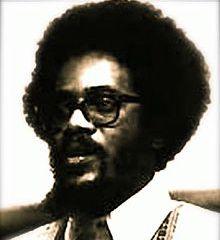
Walter Rodney

Walter Rodney Biography

Historian

Related Quotes

“Those of us who refuse to concede that global capitalism represents the planet's best future, and that Africa and the former third world are destined to remain forever ensconced in the poverty of underdevelopment, are confronted with this crucial question: how can we encourage radical critiques of capitalism as integral to struggles against racism as we also advance the recognition that we cannot envision the dismantling of capitalism as long as the structures of racism remain intact?”

“Many guilty consciences have been created by the slave trade. Europeans know that they carried on the slave trade, and Africans are aware that the trade would have been impossible if certain Africans did not cooperate with slave ships. To ease their guilty consciences, Europeans try to throw the major responsibility for the slave trade on to the Africans. One major author on the slave trade (appropriately titled Sins of Our Fathers) explained how many white people urged him to state that the trade was the responsibility of African chiefs, and that Europeans merely turned up to buy captives- as though without European demand there would have been captives sitting on the beach by the millions! Issues such as those are not the principal concern of this study, but they can be correctly approached only after understanding that Europe became the center of a world-wide system and that it was European capitalism which set slavery and the Atlantic slave trade in motion.”

“In response to the demand for more black culture and history, the national bourgeoisie of the U.S.A. has adopted a technique different from that of their neo-colonialist puppets in the West Indies. Having that security which comes from the possession of capital, they feel confident in making certain concessions to black culture in their educational institutions and media of public communications. As always, they concede the lesser demand to maintain the total structure of white capitalist domination, hoping to siphon off young blacks into a preoccupation with African history and culture divorced from the raw reality of the American system as it operates on both the domestic and international fronts. That gambit must not work. Imagine the juicy contradictions — Rockefeller finances chair on African history from the profits of exploiting South African blacks and upholding apartheid! Black revolutionaries study African culture alongside of researchers into germ warfare against the Vietnamese people! We blacks in the Americas have missed the opportunity when a more leisurely appraisal of our past might have been possible.”

“The truth is that any figure of Africans imported into the Americas which is narrowly based on the surviving records is bound to be low, because there were so many people at the time who had a vested interest in smuggling slaves (and withholding data. Nevertheless, if the low figure of ten million was accepted as basis for evaluating the impact of slaving on Africa as a whole, the conclusions that could legitimately be drawn would confound those who attempt to make light of the experience of the rape of Africans from 1445 to 1870.”

“From the beginning, Europe assumed the power to make decisions within the international trading system. An excellent illustration of that is the fact that the so-called international law which governed the conduct of nations on the high seas was nothing else but European law. Africans did not participate in its making, and in many instances, African people were simply the victims, for the law recognized them only as transportable merchandise. If the African slave was thrown overboard at sea, the only legal problem that arose was whether or not the slave ship could claim compensation from the insurers! Above all, European decision-making power was exercised in selecting what Africa should export – in accordance with European needs.”

“One of the major dilemmas inherent in the attempt by black people to break through the cultural aspects of white imperialism is that posed by the use of historical knowledge as a weapon in our struggle. We are virtually forced into the invidious position of proving our humanity by citing historical antecedents; and yet the evidence is too often submitted to the white racists for sanction. The white man has already implanted numerous historical myths in the minds of black peoples; and those have to be uprooted . . . It is necessary to direct our historical activity in the light of two basic principles[:] Firstly, the effort must be directed solely towards freeing and mobilising black minds. There must be no performances to impress whites, for those whites who find themselves beside us in the firing line will be there for reasons far more profound than their exposure to African history. Secondly, the acquired knowledge of African history must be seen as directly relevant but secondary to the concrete tactics and strategy which are necessary for our liberation. There must be no false distinctions between reflection and action . . . If there is to be any proving of our humanity it must be by revolutionary means.”

“Development means a capacity for self-sustaining growth. It means that an economy must register advances which in turn will promote further progress. The loss of industry and skill in Africa was extremely small, if we measure it from the viewpoint of modern scientific achievements or even by the standards of England in the late eighteenth century. However, it must be borne in mind that to be held back at one stage means that it is impossible to go on to a further stage. When a person is forced to leave school after only two years of primary school education, it is no reflection on him that he is academically and intellectually less developed than someone who had the opportunity to be schooled right through to university level. What Africa experienced in the early centuries of trade was precisely a loss of development opportunity, and this is of greatest importance.”

“There were a few farsighted Europeans who all along saw that the colonial educational system would serve them if and when political independence was regained in Africa. For instance, Pierre Foncin, a founder of the Alliance Francaise, stated at the beginning of this century that "it is necessary to attach the colonies to the metropolis by a very solid psychological bond, against the day when their progressive emancipation ends in a federation as is probable that they be and they remain French in language, thought and spirit.”

“Ethnic differences exist; of course they exist on the African continent. They are not necessarily political differences, however. They don't necessarily cause people to kill each other. They become so-called 'tribalism' when they are politicized in a particular framework. And in post-independence Africa they have been politicized largely by sections of the so-called African elite.”

“Marcus Garvey was one of the first advocates of Black Power, and is still today the greatest spokesman ever to have been produced by the movement of Black Consciousness...He spoke to all Africans on the earth, whether they lived in Africa, South America, the West Indies or North America, and he made Blacks aware of their strength when united.”