Quotessence
Home / Authors / William Edward Hartpole Lecky
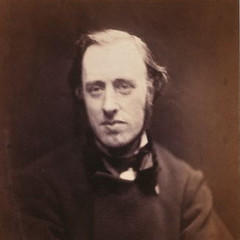
William Edward Hartpole Lecky

William Edward Hartpole Lecky Quotes

Political figure

Filter quotes by topic

Famous William Edward Hartpole Lecky Quotes

“The effect of the mortification of the domestic affections upon the general character was probably very pernicious. The family circle is the appointed sphere, not only for the performance of manifest duties, but also for the cultivation of the affections; and the extreme ferocity which so often characterised the ascetic was the natural consequence of the discipline he imposed upon himself. Severed from all other ties, the monks clung with desperate tenacity to their opinions and to their Church, and hated those who dissented from them with all the intensity of men whose whole lives were concentrated on a single subject, whose ignorance and bigotry prevented them from conceiving the possibility of any good thing in opposition to themselves, and who had made it a main object of their discipline to eradicate all natural sympathies and affections.”

“When it began, Christianity was regarded as a system entirely beyond the range and scope of human reason; it was impious to question; it was impious to examine; it was impious to discriminate. On the other hand, it was visibly instinct with the supernatural. Miracles of every order and degree of magnitude were flashing forth incessantly from all its parts.”

“Nothing, indeed, could be more unlike the tone of the [Patristic] Fathers, than the cold, passionless, and prudential theology of the eighteenth century; a theology which regarded Christianity as an admirable auxiliary to the police force, and a principle of decorum and of cohesion in society, but which carefully banished from it all enthusiasm, veiled or attenuated all its mysteries, and virtually reduced it to an authoritative system of moral philosophy.”

“The animal world being altogether external to the scheme of redemption, was regarded as beyond the range of duty, and the belief that we have any kind of obligation to its members has never been inculcated - has never, I believe, been even admitted - by Catholic theologians.”