Quotessence
Home / Authors / William Edward Hartpole Lecky
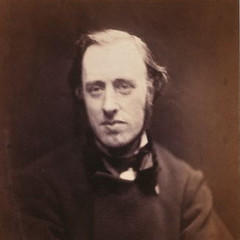
William Edward Hartpole Lecky

William Edward Hartpole Lecky Quotes

Political figure

Filter quotes by topic

Famous William Edward Hartpole Lecky Quotes

“When men have appreciated the countless differences which the exercise of that judgment must necessarily produce, when they have estimated the intrinsic fallibility of their reason, and the degree in which it is distorted by the will, when, above all, they have acquired that love of truth which a constant appeal to private judgment at last produces, they will never dream that guilt can be associated with an honest conclusion, or that one class of arguments should be stifled by authority.”

“Faith always presented to the mind the idea of an abnormal intellectual condition, of the subversion or suspension of the critical faculties. It sometimes comprised more than this, but it always included this. It was the opposite of doubt and of the spirit of doubt. What irreverent men called credulity, reverent men called faith; and although one word was more respectful than the other, yet the two words were with most men strictly synonymous.”

“Routine shortens and variety lengthens time, and it is therefore in the power of men to do something to regulate its pace. A life with many landmarks, a life which is much subdivided when those subdivisions are not of the same kind, and when new and diverse interests, impressions, and labours follow each other in swift and distinct successions, seems the most long.”

“The period of Catholic ascendancy was on the whole one of the most deplorable in the history of the human mind. . . . The spirit that shrinks from enquiry as sinful and deems a state of doubt a state of guilt, is the most enduring disease that can afflict the mind of man. Not till the education of Europe passed from the monasteries to the universities, not till Mohammedan science, and classical free thought, and industrial independence broke the sceptre of the Church, did the intellectual revival of Europe begin.”

“The moral duty to be expected in different ages is not a unity of standard, or of acts, but a unity of tendency ... At one time the benevolent affections embrace merely the family, soon the circle expanding includes first a class, then a nation, then a coalition of nations, then all humanity and finally, its influence is felt in the dealings of man with the animal world.”