Quotessence
Home / Authors / William Edward Hartpole Lecky
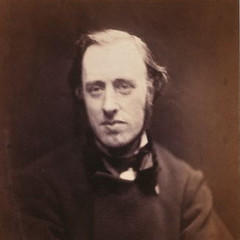
William Edward Hartpole Lecky

William Edward Hartpole Lecky Quotes

Political figure

Filter quotes by topic

Famous William Edward Hartpole Lecky Quotes

“When it began, Christianity was regarded as a system entirely beyond the range and scope of human reason; it was impious to question; it was impious to examine; it was impious to discriminate. On the other hand, it was visibly instinct with the supernatural. Miracles of every order and degree of magnitude were flashing forth incessantly from all its parts.”

“When the Church obtained the direction of the civil power, she soon modified or abandoned the tolerant maxims she had formerly inculcated; and, in the course of a few years, restrictive laws were enacted, both against the Jews and against the heretics.”

“When men have appreciated the countless differences which the exercise of that judgment must necessarily produce, when they have estimated the intrinsic fallibility of their reason, and the degree in which it is distorted by the will, when, above all, they have acquired that love of truth which a constant appeal to private judgment at last produces, they will never dream that guilt can be associated with an honest conclusion, or that one class of arguments should be stifled by authority.”

“Faith always presented to the mind the idea of an abnormal intellectual condition, of the subversion or suspension of the critical faculties. It sometimes comprised more than this, but it always included this. It was the opposite of doubt and of the spirit of doubt. What irreverent men called credulity, reverent men called faith; and although one word was more respectful than the other, yet the two words were with most men strictly synonymous.”

“Nothing, indeed, could be more unlike the tone of the [Patristic] Fathers, than the cold, passionless, and prudential theology of the eighteenth century; a theology which regarded Christianity as an admirable auxiliary to the police force, and a principle of decorum and of cohesion in society, but which carefully banished from it all enthusiasm, veiled or attenuated all its mysteries, and virtually reduced it to an authoritative system of moral philosophy.”

“Making every allowance for the errors of the most extreme fallibility, the history of Catholicism would on this hypothesis represent an amount of imposture probably unequaled in the annals of the human race.”

“[Middleton] contended that the religious leaders of the fourth century had admitted, eulogised, and habitually acted upon principles that were diametrically opposed, not simply to the aspirations of a transcendent sanctity, but to the dictates of the most common honesty. He showed that they had applauded falsehood, that they had practised the most wholesale forgery, that they had habitually and grossly falsified history, that they had adopted to the fullest extent the system of pious frauds, and that they continually employed them to stimulate the devotion of the people.”

“All over Europe the organs that represent dogmatic interests are in permanent opposition to the progressive tendencies around them, and are rapidly sinking into contempt. In every country in which a strong political life is manifested, the secularisation of politics is the consequence. Each stage of that movement has been initiated and effected by those who are most indifferent to dogmatic theology, and each has been opposed by those who are most occupied with theology.”

“On the Continent, every attempt to substitute a lighter punishment for death was fiercely denounced as a direct violation of the Divine law. Indeed, some persons went so far as to question the lawfulness of strangling the witch before she was burnt. Her crime, they said, was treason against the Almighty, and therefore to punish it by any but the most agonizing deaths was an act of disrespect to Him. Besides, the penalty in the Levitical code was stoning, and stoning had been pronounced by the Jewish theologians to be a still more painful death than the stake.”