Quotessence
Home / Quotes / Quote by H. L. Mencken

Quote by H. L. Mencken

“The taboos that I have mentioned are extraordinarily harsh and numerous. They stand around nearly every subject that is genuinely important to man: they hedge in free opinion and experimentation on all sides. Consider, for example, the matter of religion. It is debated freely and furiously in almost every country in the world save the United States, but here the critic is silenced. The result is that all religions are equally safeguarded against criticism, and that all of them lose vitality. We protect the status quo, and so make steady war upon revision and improvement.”

Quote by H. L. Mencken

Author
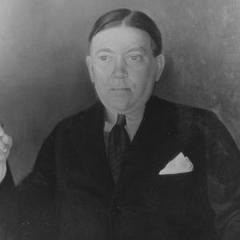
H. L. Mencken
H. L. Mencken

H. L. Mencken was an American journalist, essayist, satirist, cultural critic, and scholar of American English. Born on September 12, 1880, and passing away on January 29, 1956, Mencken is renowned for his significant contributions to American culture and language, particularly through his satirical essays and critical analyses of the American establishment. more

You May Also Like

“What I got in Sunday school ... was simply a firm conviction that the Christian faith was full of palpable absurdities, and the Christian God preposterous.... The act of worship, as carried on by Christians, seems to me to be debasing rather than ennobling. It involves groveling before a being who, if he really exists, deserves to be denounced instead of respected.”

“There comes a day of public ceremonial, and a chance to make a speech.... A million voters with IQs below 60 have their ears glued to the radio. It takes four days' hard work to concoct a speech without a sensible word in it. Next a dam must be opened somewhere. Four dry Senators get drunk and make a painful scene. The Presidential automobile runs over a dog. It rains.”

“It can do truth no service to blind the fact, known to all who have the most ordinary acquaintance with literary history, that a large portion of the noblest and most valuable moral teaching has been the work not only of men who did not know, but of men who knew and rejected the Christian faith.”

“The majority, being satisfied with the ways of mankind as they now are (for it is they who make them what they are), cannot comprehend why those ways should not be good enough for everybody; and what is more, spontaneity forms no part of the ideal of the majority of moral and social reformers, but is rather looked on with jealousy, as a troublesome and perhaps rebellious obstruction to the general acceptance of what these reformers, in their own judgment, think would be best for mankind.”

“What little recognition the idea of obligation to the public obtains in modern morality, is derived from Greek and Roman sources, not from Christian; as, even in the morality of private life, whatever exists of magnanimity, high-mindeness, personal dignity, even the sense of honour, is derived from the purely human, not the religious part of our education, and never could have grown out of a standard of ethics in which the only worth, professedly recognized, is that of obedience.”

“Christian morality (so called) has all the characters of a reaction.... In its horror of sensuality, it made an idol of asceticism, which has been gradually compromised away into one of legality. It holds out the hope of heaven and the threat of hell, as the appointed and appropriate motives to a virtuous life - in this falling far below the best of the ancients, and doing what lies in it to give to human morality an essentially selfish character.... It is essentially a doctrine of passive obedience; it inculcates submission to all authorities found established.”