“I speak not of men's creeds—they rest between Man and his Maker.”
Quote by Lord Byron
Work
CHILDE HAROLD'S PILGRIMAGE
Childe Harold's Pilgrimage is a collection of four cantos written by the Romantic poet George Gordon Byron. The poem follows the protagonist, Childe Harold, on his journey through Europe, reflecting on his experiences and the complexities of human existence. The work is known for its vivid descriptions of landscapes and its exploration of themes such as solitude, love, and the passage of time. more
Author
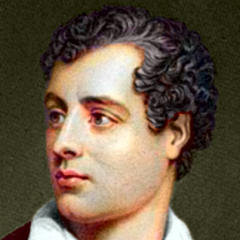
Lord Byron
Lord Byron, born on January 22, 1788, and died on April 19, 1824, was a prominent English Romantic poet. His poetry is characterized by its strong personality and passion, and has had a profound impact on literature. more
You May Also Like
“That music in itself, whose sounds are song, The poetry of speech.”
Source: CHILDE HAROLD'S PILGRIMAGE
Source: The Advancement of Learning
Source: Advancement of Learning: And Novum Organum
Source: The Works of Francis Bacon, Lord Chancellor of England: A New Edition:
Source: Chimneysmoke
Source: Kitty Foyle
Source: Christopher Morley's omnibus: an excursion among the books of Christopher Morley
Source: An essay concerning human understanding ... The twentieth edition, etc
“On the fourth day of telecommuting, I realized that clothes are totally unnecessary.”
Source: The Dilbert principle: a cubicle's-eye view of bosses, meetings, management fads & other workplace afflictions